Ever wondered why Italian grandmothers start baking Christmas sweets in November, or why a witch delivers presents instead of Santa in some regions?
Christmas in Italy isn’t just a holiday—it’s a month-long celebration complete with spectacular nativity displays, midnight feasts that last until dawn, and traditions that would make even the Grinch crack a smile.
I vividly remember my first Italian Christmas: I expected snow and got sunshine, I waited for Santa and met La Befana instead, and I assumed supper would last an hour but ended up at the table till 2 AM.
If you’re ready to discover a side of Christmas that’s equal parts beautiful, tasty, and delightfully weird, grab your espresso and let’s plunge into the fascinating world of Italian Christmas traditions!
Fun Facts About Christmas in Italy for Kids
- In Italy, children receive presents twice during the Christmas season—once on Christmas and again on January 6th from La Befana, the kind witch!
- Italian kids leave their shoes out on Epiphany Eve, hoping La Befana will fill them with candy instead of coal lumps.
- Baby Jesus brings the presents on Christmas morning in many Italian homes, not Santa Claus!
- Children in Italy often perform in school nativity plays where they dress as shepherds, angels, and sometimes even donkeys.
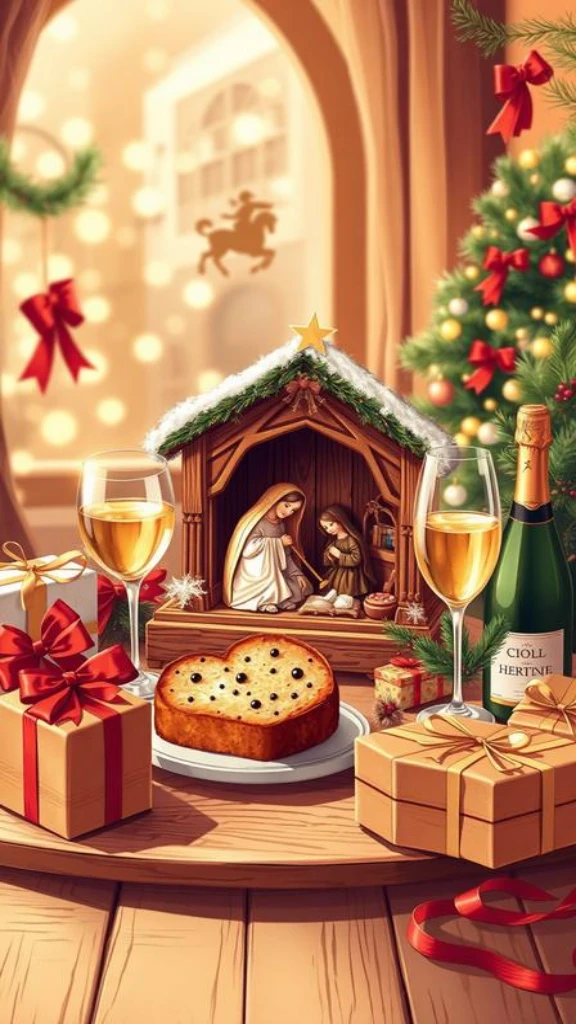
- Italian families build elaborate presepe (nativity scenes) together, and some villages create life-sized versions with real people and animals!
- Kids help decorate the Christmas tree on December 8th, which is a special holiday in Italy called the Feast of the Immaculate Conception.
- During Christmas season, Italian children sing traditional carols called “canti natalizi” while walking through their neighborhoods.
- Many Italian kids write letters to Baby Jesus instead of Santa, listing their wishes and promises to be good.
- Panettone, the tall fluffy Christmas cake, is so popular that Italian children often have it for breakfast throughout December.
- In some Italian regions, children participate in “living nativity scenes” where entire villages recreate Bethlehem with costumes and decorations.
- Italian kids learn that La Befana flies on a broomstick and enters homes through the chimney, just like Santa does in other countries.
- Christmas markets in Italy sell special treats for children, including torrone (nougat) and marzipan shaped like fruits and animals.
- Many Italian children receive an Advent calendar filled with small chocolates to count down the days until Christmas.
- Kids in Italy often visit the Vatican during Christmas to see the massive nativity scene in St. Peter’s Square.
- Italian families with children attend Midnight Mass together, even though it starts quite late for young ones!
- Children help their parents prepare special Christmas cookies called “biscotti di Natale” decorated with colorful icing.
- In southern Italy, kids participate in the tradition of the “Novena,” nine days of prayers and songs before Christmas.
- Italian children learn that the three wise men didn’t arrive until January 6th, which is why Epiphany is such an important holiday.
- Many kids receive a chocolate Yule log cake called “tronchetto di Natale” as a special Christmas dessert.
- Italian children often create handmade ornaments and decorations for the family Christmas tree using pasta, paper, and glitter.
- Kids in Italy know that Christmas lights go up later than in other countries—usually not until mid-December.
- Italian children participate in the tradition of fasting before the big Christmas Eve feast, making dinner even more exciting.
- Many Italian kids help set up the “ceppo,” a wooden pyramid decorated with small gifts, candles, and a nativity scene.
- Children learn traditional Italian Christmas songs like “Tu scendi dalle stelle” that have been sung for centuries.
- Italian kids often receive practical gifts mixed with toys, as education and usefulness are valued in Italian culture.
Fun Facts About Christmas in Italy for Students
- The Italian Christmas season officially begins on December 8th and doesn’t end until January 6th, making it a month-long celebration.
- The word “presepe” comes from the Latin word “praesepium,” meaning manger or feeding trough for animals.
- St. Francis of Assisi created the first living nativity scene in 1223 in the Italian town of Greccio.
- Italian universities and schools typically close around December 20th and don’t reopen until after Epiphany on January 6th.
- The tradition of the Christmas tree only became popular in Italy in the 20th century, adopted from Northern European customs.
- Studies show that Italians spend an average of 8-10 hours preparing the Feast of the Seven Fishes for Christmas Eve.
- The Vatican City in Rome is technically its own country and hosts one of the world’s most famous Christmas celebrations.
- Italian Christmas vocabulary includes unique words like “ceppo” (Yule log), “zampogna” (bagpipe), and “cenone” (big dinner).
- Research indicates that over 90% of Italian families, regardless of religious practice, celebrate Christmas with traditional meals.
- The panettone industry in Italy generates over 600 million euros annually during the Christmas season.
- Italian literature features numerous Christmas stories, including works by Giovanni Pascoli and Grazia Deledda.
- The economic impact of Christmas in Italy accounts for approximately 15% of annual retail sales.
- Architecture students study the intricate baroque nativity scenes in Neapolitan churches as examples of miniature craftsmanship.
- The tradition of eating lentils on New Year’s Eve symbolizes wealth because their shape resembles coins—a custom dating back to Roman times.
- Italy produces approximately 40 million panettone cakes each year, with about 10 million exported worldwide.
- The Christmas season significantly impacts Italian tourism, with hotel occupancy rates increasing by 30-40% in major cities.
- Students learning Italian often study Christmas vocabulary as it includes regional dialects and historical linguistic variations.
- The Italian tradition of the “cenone della vigilia” (Christmas Eve big dinner) reflects Mediterranean dietary patterns studied by nutritionists.
- Art history students examine Renaissance and Baroque paintings of the Nativity as important cultural artifacts.
- The economic concept of “gift-giving reciprocity” is strongly observed in Italian Christmas traditions, studied in sociology courses.
- Italian Christmas music includes both religious hymns and folk songs that musicology students analyze for historical context.
- The tradition of wearing red underwear on New Year’s Eve became commercialized in the 1960s and is now a multi-million euro industry.
- Students of European studies note that Italian Christmas traditions blend Roman, Christian, and pagan elements seamlessly.
- The Italian film industry produces numerous Christmas movies that cultural studies students examine for societal values.
- Environmental studies students research the sustainability of Christmas traditions, including the debate between real versus artificial trees.
Christmas Traditions in Italy
- La Befana, a kind old witch, visits children on the night of January 5th, delivering candy to good kids and coal to naughty ones.
- The Feast of the Seven Fishes is served on Christmas Eve, featuring multiple seafood dishes representing the seven sacraments.
- Families gather to build their presepe starting December 8th, but the baby Jesus figure isn’t placed until Christmas Eve.
- Attending Midnight Mass, called “Messa di Mezzanotte,” is a cherished tradition where communities come together in celebration.
- The Christmas meal, “pranzo di Natale,” often features multiple courses and can last for four to six hours with family.
- Zampognari, traditional bagpipe players dressed as shepherds, perform in city streets during the weeks leading up to Christmas.
- Torrone, a nougat candy made with honey, almonds, and egg whites, is a traditional Christmas sweet enjoyed throughout Italy.
- The “ceppo” tradition involves a wooden frame decorated with colored paper, small gifts, and candles arranged in pyramid form.
- Italians toast with spumante (Italian sparkling wine) at midnight on Christmas Eve after returning from church.
- Many families play tombola, an Italian version of bingo, on Christmas Day with prizes ranging from small toys to money.
- The “urn of fate” tradition involves drawing names to exchange gifts, similar to Secret Santa, practiced in many Italian households.
- Wearing something new on Christmas Day, especially new shoes or clothing, symbolizes starting fresh for the new year.
- The Christmas dinner typically includes cappelletti in brodo (small pasta in broth), roasted meats, and multiple side dishes.
- Panettone and pandoro, two iconic Italian Christmas cakes, are gifts exchanged between friends, family, and business associates.
- Many Italian regions celebrate with live nativity reenactments where entire villages participate in elaborate productions.
- The tradition of decorating with mistletoe and holly came later to Italy, borrowed from Northern European customs.
- Christmas lights and decorations in Italy tend to be elegant and understated compared to the elaborate displays in other countries.
- Fasting before the Christmas Eve feast is observed by traditional families, abstaining from meat throughout the day.
- The “novena” involves nine days of special prayers, songs, and gatherings starting December 16th in preparation for Christmas.
- Regional variations mean that southern Italians often have different traditions than those in the north, particularly regarding food.
- Many Italian families attend a blessing ceremony where priests bless nativity figures before they’re placed in the home.
- The tradition of making struffoli, honey-covered fried dough balls, is especially popular in Naples during Christmas.
- Exchanging auguri (good wishes) with everyone you meet during the Christmas season is considered essential etiquette.
- The Christmas period includes several saint feast days that Italians observe with special prayers and family gatherings.
- Opening gifts occurs on Christmas morning after breakfast, unlike some countries where presents are opened on Christmas Eve.
10 Facts About Christmas in Italy
- Italy celebrates Christmas for nearly a month, starting on December 8th with the Feast of the Immaculate Conception and ending January 6th with Epiphany.
- The tradition of creating nativity scenes originated in Italy when St. Francis of Assisi built the first presepe in 1223 in Greccio.
- La Befana, not Santa Claus, is the primary gift-bringer in Italian tradition, delivering presents to children on Epiphany Eve, January 5th.
- The Feast of the Seven Fishes on Christmas Eve represents one of Italy’s most important culinary traditions, with families serving multiple seafood courses.
- Panettone, the iconic dome-shaped Christmas cake from Milan, takes over 24 hours to make and has been produced since the 15th century.
- Christmas Day dinner in Italy is a grand affair featuring multiple courses, often including cappelletti in broth, roasted meats, and various vegetables.
- The Vatican hosts one of the world’s most magnificent Christmas celebrations, with the Pope delivering a special blessing in St. Peter’s Square.
- Italian Christmas markets, called “mercatini di Natale,” sell traditional crafts, foods, and decorations throughout December in major cities.
- The Italian tradition of eating lentils on New Year’s Eve symbolizes prosperity for the coming year because their coin-like shape represents money.
- Christmas in Italy is primarily a religious and family-focused holiday, with commercial aspects being less prominent than in many other Western countries.
- Many Italian families display elaborate nativity scenes that include not just the holy family but entire villages with hundreds of figurines.
- The tradition of Midnight Mass is taken very seriously, with churches filling to capacity and services featuring beautiful music and elaborate ceremonies.
- Italians exchange gifts primarily on Christmas Day rather than Christmas Eve, though this varies by region and family tradition.
- The Italian Christmas tree tradition became widespread only in the 20th century, while nativity scenes have been central for hundreds of years.
- Regional Christmas specialties vary dramatically: torrone in Lombardy, struffoli in Naples, panforte in Siena, and ricciarelli in Tuscany.
- The period between Christmas and Epiphany is called “Le Vacanze Natalizie,” when most Italians take extended time off work.
- Italian Christmas decorations tend toward elegance and religious symbolism rather than the whimsical or secular themes common elsewhere.
- The tradition of playing tombola (Italian bingo) on Christmas Day dates back centuries and includes unique Italian interpretations for each number.
- Many Italian regions maintain unique Christmas traditions: in Abruzzo, living nativity scenes; in Sicily, the Bonfires of St. Lucia.
- Christmas markets in Italy blend German-influenced northern traditions with Mediterranean southern customs, creating a unique festive atmosphere.
Christmas Traditions in Italy Facts for Kids
- La Befana is actually a kind witch who got lost while trying to bring gifts to baby Jesus, so now she brings gifts to all children!
- Italian kids help their parents make the nativity scene, which can include tiny houses, bridges, rivers, and even working fountains!
- The baby Jesus figurine in the presepe is kissed by each family member before being placed in the manger on Christmas Eve.
- Children in Italy sing special Christmas songs called carols while walking through their neighborhoods collecting small donations for charity.
- Kids learn that the three wise men are still traveling to see baby Jesus until January 6th, which is why Epiphany is so important.
- Italian families often have a Christmas tree and a nativity scene, giving children the fun of decorating both!
- Making Christmas cookies together is a beloved tradition, with kids using cookie cutters shaped like stars, trees, and angels.
- Children leave out their shoes on January 5th, and La Befana fills good kids’ shoes with candy and toys overnight.
- The Yule log tradition in Italy involves kids helping to choose and decorate a special log that’s burned in the fireplace.
- Italian children participate in Christmas plays at school where they act out the story of baby Jesus’s birth.
- Kids help prepare for the Feast of the Seven Fishes by setting the table with the family’s best dishes and decorations.
- Many Italian children write letters to baby Jesus explaining why they deserve presents and what they’d like to receive.
- Playing tombola on Christmas Day is exciting for kids because they can win small prizes like coins, chocolates, or toys.
- Children learn traditional Italian Christmas recipes from their grandparents, passing down family secrets for generations.
- Italian kids often visit elaborate nativity displays in churches that feature moving figures, twinkling lights, and realistic scenery.
- The tradition of attending Midnight Mass is special for older kids who are allowed to stay up late for this important celebration.
- Children help make struffoli, rolling tiny pieces of dough and watching them transform into golden balls covered in honey.
- Italian kids learn that Christmas is about family, faith, and giving rather than just receiving presents.
- Making homemade ornaments from pasta, which is then painted and glittered, is a fun craft activity for Italian children.
- Kids participate in the “living nativity” performances, dressing in ancient costumes and helping to recreate biblical scenes.
- Italian children enjoy hot chocolate and panettone for breakfast during the Christmas season as a special treat.
- Learning the story of St. Francis creating the first nativity scene helps children understand why this tradition is so important in Italy.
- Kids help their parents shop at Christmas markets, choosing special ingredients for holiday meals and handmade decorations.
- The tradition of giving to others is emphasized, with children often donating toys or helping prepare food for those in need.
- Italian children discover that Christmas celebrations are longer in Italy than many other countries, giving them more time to enjoy the festivities!
Where to Spend Christmas in Italy
- Rome offers a magical Christmas experience with the Vatican’s elaborate celebrations, spectacular nativity scene in St. Peter’s Square, and the Pope’s blessing.
- Venice transforms into a winter wonderland during Christmas, with gondolas gliding through misty canals and St. Mark’s Square hosting festive concerts.
- Florence showcases Renaissance beauty during Christmas with the stunning Duomo lit up, traditional markets, and the German Christmas Market in Piazza Santa Croce.
- Naples is famous for having the most elaborate nativity scene tradition, with the entire Via San Gregorio Armeno dedicated to presepe artisans.
- Milan combines modern sophistication with traditional celebration, featuring the world’s largest panettone and the stunning Duomo square illuminated festively.
- Sicily offers a unique warm-weather Christmas experience with special foods like buccellato and the tradition of lighting bonfires for St. Lucia.
- The Dolomites region provides a snowy, Alpine Christmas atmosphere with charming mountain villages, skiing, and German-influenced Christmas markets.
- Bologna celebrates with its famous tortellini in broth tradition and beautiful porticoed streets decorated with elegant Christmas lights.
- Assisi holds special significance during Christmas as the birthplace of the nativity scene tradition started by St. Francis.
- Turin hosts one of Italy’s largest Christmas markets with over 180 stalls, an ice skating rink, and the spectacular Piazza Castello.
- Verona combines Shakespearean romance with Christmas magic, featuring markets, lights, and the stunning Arena di Verona decorated festively.
- The Amalfi Coast offers a milder Christmas climate with traditional celebrations in picturesque clifftop villages overlooking the Mediterranean.
- Siena maintains medieval Christmas traditions with the Palio districts competing to create the most beautiful nativity scenes.
- Lake Como provides a sophisticated Christmas atmosphere with luxury hotels, beautiful villas decorated for the season, and mountain backdrop.
- Matera, with its ancient cave dwellings, creates an atmospheric setting for living nativity scenes that feel authentic and timeless.
- Trento combines Italian and Austrian traditions in its Christmas markets, offering the best of both cultures in one celebration.
- Perugia in Umbria features chocolate-focused Christmas celebrations, including a giant Christmas tree made entirely of chocolate!
- The trulli houses of Alberobello in Puglia are decorated with lights, creating a fairytale Christmas scene unlike anywhere else.
- Bologna’s Twin Towers provide a dramatic backdrop for Christmas celebrations featuring traditional Bolognese Christmas foods and markets.
- The island of Sardinia offers unique Christmas traditions including roasted suckling pig and distinctive regional carols sung in Sardinian dialect.
- Bergamo’s upper town transforms into a Christmas village with the historic Città Alta providing a medieval atmosphere for celebrations.
- Mantua celebrates Christmas with its famous tortelli di zucca and beautiful Renaissance palaces illuminated for the holiday season.
- Cortina d’Ampezzo in the Dolomites offers a glamorous ski resort Christmas with stunning mountain views and luxury accommodations.
- Lucca’s Renaissance walls are illuminated during Christmas, and the city hosts wonderful markets within its perfectly preserved medieval streets.
- San Gimignano’s medieval towers create a stunning backdrop for Christmas markets selling traditional Tuscan crafts and foods.
History of Christmas in Italy
- Christmas celebrations in Italy date back to the 4th century when Christianity became the Roman Empire’s official religion under Constantine.
- St. Francis of Assisi revolutionized Christmas celebrations in 1223 by creating the first living nativity scene in Greccio, Italy.
- The tradition of the nativity scene spread rapidly throughout Italy after St. Francis’s innovation, becoming central to Italian Christmas.
- During the Middle Ages, Italian churches began holding elaborate Christmas masses with special music, decorations, and dramatic presentations.
- The Renaissance period saw Italian artists creating magnificent nativity paintings and sculptures that influenced Christmas art worldwide.
- Naples developed a unique presepe tradition in the 18th century, creating elaborate miniature scenes with hundreds of detailed figures.
- The tradition of La Befana combines pre-Christian Italian folklore with Christian celebration, dating back thousands of years.
- Italian Christmas carols, including the famous “Tu scendi dalle stelle,” were composed in the 18th century and remain popular today.
- Panettone originated in Milan during the Renaissance, with legends dating its creation to the 15th century.
- The Feast of the Seven Fishes developed from the Catholic tradition of abstaining from meat on Christmas Eve’s vigil.
- Italian immigrants brought their Christmas traditions to America, Argentina, and Australia, influencing celebrations in these countries significantly.
- The Vatican’s Christmas celebrations became increasingly elaborate after the unification of Italy in the 19th century.
- Christmas tree traditions arrived in Italy relatively late, gaining popularity only in the early 20th century through Austrian influence.
- The tradition of exchanging gifts on Epiphany rather than Christmas Day reflects Italy’s emphasis on the Three Wise Men’s arrival.
- Regional Christmas traditions developed based on local patron saints, agricultural cycles, and historical influences from various rulers.
- The commercialization of Christmas in Italy began much later than in America or Britain, maintaining more religious focus longer.
- World War II significantly impacted Italian Christmas celebrations, with families creating traditions around scarcity and resilience.
- Post-war Italy saw the revival and preservation of traditional Christmas customs as part of cultural identity rebuilding.
- The 1960s brought increased prosperity to Italy, allowing families to elaborate their Christmas celebrations with more food and gifts.
- Modern Italian Christmas balances ancient religious traditions with contemporary secular celebrations, though family remains central.
- The globalization of the late 20th century introduced elements like Santa Claus, though he never replaced La Befana’s importance.
- Italian Christmas markets expanded significantly in the 21st century, particularly in northern regions influenced by nearby Germany and Austria.
- The tradition of the Christmas Eve cenone evolved from simple fish dinners to elaborate multi-course feasts over centuries.
- Regional diversity in Christmas traditions reflects Italy’s history as separate kingdoms and city-states until the 1860s unification.
- Contemporary Italian Christmas maintains a remarkable balance between preserving centuries-old traditions and embracing modern celebrations.
Conclusion
And there you have it—over 200 amazing facts about how Italy celebrates the most delightful time of the year! From La Befana’s midnight flights to marathon feasts that stretch until dawn, Italian Christmas is a magnificent blend of historical customs, religious devotion, and pure delight.
Whether you’re preparing your own Italian-inspired party, researching Italian culture, or simply daydreaming about cobblestone streets filled with glittering lights, I hope these facts have brought you to the heart of an Italian Christmas.
Now go off and dazzle your friends with your newfound knowledge—just don’t blame me when you suddenly need panettone at 3 AM! Buon Natale e Felice Anno Nuovo!