Ever wondered how Christmas looks under Egyptian skies? Picture this: old pyramids towering tall while church bells sound out joyful tunes, and families gathering not on December 25th, but on an entirely different date!
I’ve always found Egypt’s Christmas traditions very fascinating—there’s something beautiful about merging thousands of years of history with Christian celebrations. If you believe Christmas in Egypt is simply like anywhere else, buckle up!
You’re about to discover a world where fasting meets feasting, Coptic calendars govern the calendar, and Christmas supper can surprise your taste buds.
Let’s unwrap these wonderful Egyptian Christmas treasures together!
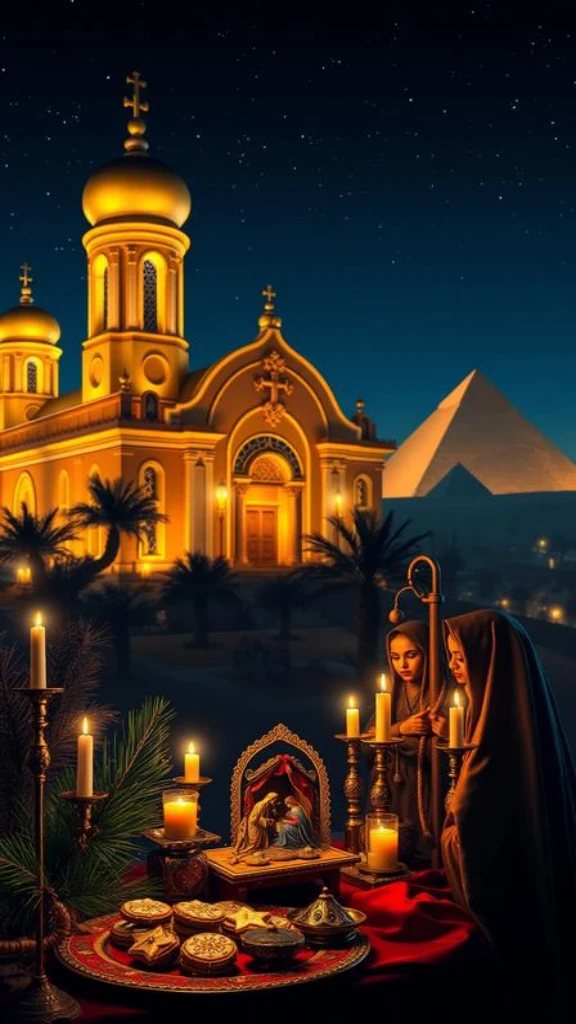
Fun Facts About Christmas in Egypt for Kids
- Egyptian kids often receive gifts on January 7th instead of December 25th, making their Christmas extra special and unique!
- Many Egyptian children help decorate their homes with palm branches and colorful lights that sparkle like desert stars.
- Kids in Egypt love eating a special cookie called “kahk” during Christmas—it’s sweet, buttery, and absolutely delicious!
- Egyptian children attend midnight mass that can last for three hours, but they stay excited the whole time!
- Santa Claus in Egypt is sometimes called “Papa Noel,” and he might arrive riding a camel instead of a sleigh!
- Young Egyptians learn beautiful Coptic hymns in ancient languages that have been sung for over 2,000 years.
- Egyptian kids fast from meat and dairy for 43 days before Christmas, which makes the Christmas feast extra delicious!
- Children in Egypt often make nativity scenes using local materials like sand and palm leaves for a desert touch.
- Egyptian youngsters celebrate with special church services where candles light up like thousands of tiny stars.
- Kids enjoy traditional Egyptian Christmas games and activities with their cousins and extended families.
- Many Egyptian children wear brand-new clothes to church on Christmas Eve as a symbol of fresh beginnings.
- Young ones in Egypt often receive money from relatives during Christmas, called “Eidiya,” similar to other celebrations.
- Egyptian kids love hearing stories about Saint Mark, who brought Christianity to Egypt in the first century.
- Children participate in Christmas pageants at church, acting out the nativity story with authentic Middle Eastern flair.
- Egyptian youngsters enjoy watching special Christmas TV programs that blend local culture with festive themes.
- Kids in Egypt often help their mothers prepare “fatta,” a traditional dish served during the Christmas celebration.
- Egyptian children learn that their Christmas traditions are among the oldest Christian celebrations in the world!
- Young Egyptians love the excitement of breaking their fast with a huge family meal after midnight mass.
- Kids enjoy decorating Christmas trees with Egyptian-themed ornaments, including tiny pyramids and pharaoh figures.
- Egyptian children often visit friends and neighbors during the Christmas season, sharing sweets and good wishes.
- Many kids in Egypt receive religious books or icons as meaningful Christmas gifts that they treasure.
- Egyptian youngsters participate in charity activities during Christmas, helping less fortunate families in their communities.
- Children love the special Christmas bread called “qurban” that’s blessed and shared in church services.
- Young Egyptians enjoy the festive atmosphere in Christian neighborhoods where streets are decorated with lights and crosses.
- Kids in Egypt learn that Christmas is called “Eid Milad el Masih,” which means “Birthday of Christ” in Arabic!
5 Fun Facts About Christmas in Egypt
- Egypt celebrates Christmas on January 7th according to the Coptic Orthodox calendar, which follows the ancient Julian calendar rather than the modern Gregorian one—making it one of the few countries where New Year comes before Christmas!
- The Christmas fast in Egypt lasts 43 days and is called the “Holy Nativity Fast,” where Coptic Christians abstain from all animal products, making it longer than Lent!
- Egyptian Christians attend a special midnight mass called “Kiahk liturgy” that can stretch for three to four hours, filled with ancient hymns and incense that transport worshippers back thousands of years.
- Traditional Egyptian Christmas food includes “fatta,” a magnificent dish made with rice, bread, garlic, and meat that’s served after breaking the long fast—it’s pure comfort food!
- Egypt is home to one of the oldest Christian communities in the world, with Coptic Christianity dating back to the first century when Saint Mark arrived in Alexandria!
What Are Some Fun Facts About Christmas in Egypt
- Egyptian Christmas markets don’t look like European ones—instead, you’ll find local vendors selling traditional treats and religious items outside churches.
- The Coptic Cross is everywhere during Egyptian Christmas, featuring intricate designs that symbolize ancient Christian heritage.
- Many Egyptian families attend multiple church services during the Christmas season, not just one on Christmas Eve.
- Egyptian Christmas carols are sung in Coptic, Arabic, and sometimes English, creating a beautiful multilingual celebration.
- The Christmas season in Egypt officially begins with Advent, but the major celebration peaks on January 7th.
- Egyptian churches are adorned with red decorations symbolizing the blood of martyrs and the joy of Christ’s birth.
- Coptic Pope leads the main Christmas mass at Saint Mark’s Cathedral in Cairo, which is broadcast across the nation.
- Egyptian Christmas doesn’t involve snow—instead, it’s celebrated under sunny skies with temperatures around 15-20°C (59-68°F)!
- Many Egyptian Christians decorate their homes with nativity scenes featuring Middle Eastern architecture and desert landscapes.
- The Egyptian tradition of “ful medames” (fava beans) is sometimes eaten for Christmas breakfast after breaking the fast.
- Egyptian Christmas trees are becoming more popular in urban areas, blending Western traditions with local customs.
- The phrase “Eid Milad Majid” means “Glorious Birth Feast” and is commonly used as a Christmas greeting in Egypt.
- Egyptian bakeries create special Christmas versions of traditional pastries, adding festive spices and decorations.
- Many Egyptian families visit the Holy Family’s trail—historic sites where Mary, Joseph, and baby Jesus reportedly stayed during their flight to Egypt.
- Christmas in Egypt is an official public holiday, allowing Coptic Christians to celebrate freely and joyfully.
- Egyptian children sometimes participate in street processions carrying candles and singing hymns through Christian neighborhoods.
- The iconic Saint Mark’s Coptic Orthodox Cathedral in Alexandria becomes a focal point for Christmas celebrations.
- Egyptian Christmas postcards and greeting cards often feature Pharaonic art mixed with Christian imagery—a unique cultural blend!
- Many Egyptian families break their fast with dates and water, following Islamic tradition that’s been adopted across cultures.
- The Christmas season in Egypt includes special charitable activities where communities help feed the poor and needy.
- Egyptian monasteries, some dating back 1,500 years, hold special Christmas services attracting pilgrims from around the world.
- Coptic Christmas hymns called “Tasbeha” can last several hours and are performed in ancient musical styles preserved for centuries.
- Egyptian Christmas involves less commercial shopping compared to Western countries, focusing more on spiritual and family aspects.
- Many Egyptian Christians light special candles during Christmas Eve services, creating a breathtaking sea of flickering lights.
- The Christmas celebration in Egypt continues through Epiphany on January 19th, making it an extended festive season!
Why Does Egypt Celebrate Christmas on January 7th
- Egypt follows the ancient Julian calendar established by Julius Caesar in 45 BCE for religious celebrations, not the modern Gregorian calendar.
- The Coptic Orthodox Church rejected the Gregorian calendar reform of 1582, choosing to maintain traditional astronomical calculations.
- The 13-day difference between Julian and Gregorian calendars is why Egyptian Christmas falls on January 7th instead of December 25th.
- Coptic Christians believe the Julian calendar more accurately reflects the astronomical year used during early Christianity.
- This calendar tradition connects modern Egyptian Christians directly to their ancient ancestors and early church fathers.
- The Coptic calendar actually has 13 months, with the extra month having only 5 or 6 days!
- Egypt’s January 7th Christmas aligns with other Orthodox churches like Russia, Serbia, and Ethiopia that also use the Julian calendar.
- The date represents continuity with traditions established by the early Church Fathers in Alexandria centuries ago.
- Pope Gregory XIII’s calendar reform was primarily Catholic, and Orthodox churches maintained their traditional dating systems.
- Egyptian religious scholars argue that the Julian calendar better preserves the connection to biblical astronomical events.
- The 13-day gap between calendars increases by one day every 128 years due to slight astronomical differences.
- Celebrating on January 7th allows Egyptian Christians to maintain distinct identity while honoring ancient traditions.
- The Coptic Church officially recognizes both calendars but uses Julian for all religious feasts and celebrations.
- This dating system means Egyptian Christians celebrate Christmas during Epiphany season in the Western calendar.
- Historical records show Coptic Christians have consistently used this calendar for religious purposes since the 4th century.
- The January 7th date creates a unique rhythm where secular New Year celebrations happen before religious Christmas festivities.
- Egyptian monasteries have preserved astronomical texts explaining the Julian calendar’s religious significance for centuries.
- This calendar difference actually helps Egyptian Christians avoid some commercial pressures of December 25th celebrations.
- The Coptic Orthodox Church maintains this tradition as part of preserving one of Christianity’s oldest unbroken lineages.
- Understanding this calendar difference is essential to appreciating Egypt’s unique place in Christian history and tradition.
What Are Some Facts About Christmas in Egypt
- Egypt has approximately 10-15 million Coptic Christians, making it the largest Christian community in the Middle East.
- The word “Copt” comes from the Greek word “Aigyptos,” which literally means “Egyptian.”
- Egyptian Christmas preparations include thorough house cleaning, similar to spring cleaning traditions in other cultures.
- Many Egyptian Christians paint crosses on their doorways using blessed oil during the Christmas season.
- The traditional Egyptian Christmas greeting “Kol sana wenta tayeb” means “May you be well every year.”
- Egyptian churches use frankincense and myrrh during Christmas services—the same gifts the Magi brought to baby Jesus!
- Some Egyptian families create elaborate Coptic crosses from flowers and palm branches for Christmas decorations.
- The Christmas liturgy in Egypt includes readings in Coptic, one of the world’s oldest Christian liturgical languages.
- Egyptian Christmas stamps and coins are sometimes issued featuring Coptic crosses and nativity scenes.
- Many Egyptian Christians name their children born around Christmas “Milad” (birth) or “Nativity” in various forms.
- The Egyptian Museum in Cairo displays ancient Christian artifacts that connect modern celebrations to early church history.
- Christmas in Egypt involves extensive family gatherings, with relatives traveling from across the country to reunite.
- Egyptian television broadcasts special Christmas programming including religious services, documentaries, and festive shows.
- Traditional Egyptian Christmas music blends Coptic chants with modern Arabic melodies creating unique festive sounds.
- The Christmas fast is so serious that many Coptic restaurants close or offer special vegan menus during this period.
- Egyptian Christians often visit “Holy Family” sites in Cairo, including the famous hanging church in Old Cairo.
- Christmas cards in Egypt frequently feature Arabic calligraphy combined with traditional Christian imagery.
- Many Egyptian brides avoid scheduling weddings during the Christmas fast period out of respect for tradition.
- The Coptic Christmas celebration officially begins with vespers on the evening of January 6th.
- Egyptian Christmas involves distinctive food traditions like “zalabya” (sweet fried dough) served after midnight mass.
- Some Egyptian families keep nativity scenes displayed until the Feast of Epiphany on January 19th.
- The Christmas season in Egypt includes special prayer vigils called “Tasbeha” held throughout the night.
- Egyptian Christian businesses often close on January 7th, making it a recognized public holiday across the country.
- Modern Egyptian cities like Cairo and Alexandria feature beautiful Christmas light displays in Christian neighborhoods.
- The blending of ancient Egyptian heritage with Christian tradition makes Egypt’s Christmas celebration truly one-of-a-kind worldwide!
5 Facts About Christmas in Egypt
- The 43-day Christmas fast in Egypt is one of the strictest in Christian tradition—no meat, dairy, eggs, or fish allowed, only on specific feast days—making the Christmas feast a truly joyous breaking of this long spiritual discipline!
- Egyptian Christians believe the Holy Family spent nearly three and a half years in Egypt during their flight from King Herod, visiting multiple locations that have become pilgrimage sites during the Christmas season.
- “Kahk” cookies, a traditional Egyptian Christmas treat, have ancient origins dating back to Pharaonic times when similar cookies were offered to gods—now they’re blessed in church and shared with neighbors!
- The Coptic Christmas celebration includes a unique tradition where church elders distribute blessed bread called “qurban” to the congregation, symbolizing communion and community unity.
- Egypt’s Christmas coincides with Orthodox Epiphany season, meaning some Egyptian Christians celebrate both Christ’s birth and baptism within a two-week period, creating an extended festive atmosphere!
Egypt Christmas Holiday
- Christmas Day (January 7th) is an official public holiday in Egypt, with government offices and many businesses closed.
- The Egyptian government recognizes and respects Coptic Christmas as part of the nation’s diverse cultural heritage.
- Egyptian Christmas holidays typically include January 6th (Christmas Eve) and January 7th (Christmas Day) as days off.
- Many Egyptian businesses owned by Christians close for several days around Christmas to allow employees to celebrate fully.
- Schools in Egypt often schedule winter break to accommodate both Islamic and Christian holidays respectfully.
- The Egyptian tourism industry sees increased domestic travel during Christmas as families visit religious sites.
- Egyptian hotels and resorts offer special Christmas packages catering to Coptic Christian families during the holiday.
- Public transportation in Egypt increases services to churches on Christmas Eve to accommodate midnight mass attendees.
- Egyptian police provide extra security around churches during Christmas celebrations to ensure safe worship.
- The Christmas holiday in Egypt creates opportunities for interfaith solidarity, with Muslim neighbors often greeting Christian friends.
- Egyptian media provides extensive coverage of Christmas celebrations, including live broadcasts of papal mass.
- Some Egyptian cities organize Christmas festivals featuring traditional Coptic music, food, and cultural exhibitions.
- The Christmas holiday period sees Egyptian bakeries working overtime producing traditional festive sweets and breads.
- Egyptian Christian charities organize special Christmas meals and gift distributions for underprivileged families during the holiday.
- Many Egyptian workplaces exchange Christmas greetings cards even in predominantly Muslim offices, showing cultural respect.
- The holiday season in Egypt includes special Christmas concerts featuring Coptic choirs and traditional instruments.
- Egyptian Christian schools organize special Christmas programs where students perform nativity plays and carol concerts.
- The Christmas holiday creates a unique atmosphere in Egyptian cities where church bells, calls to prayer, and festive music coexist.
- Many Egyptian families use the Christmas holiday to visit elderly relatives and maintain strong family bonds.
- Egyptian street vendors capitalize on Christmas by selling decorations, candles, and festive items outside churches.
- The holiday period sees Egyptian social media filled with Christmas greetings, photos, and videos of celebrations.
- Egyptian restaurants and cafes in Christian neighborhoods offer special Christmas menus featuring traditional festive dishes.
- The Christmas holiday in Egypt reminds the world that Christianity has deep Middle Eastern roots and isn’t just a Western religion.
- Many Egyptian Christians take advantage of the holiday to perform acts of charity and community service.
- The Egyptian Christmas holiday represents religious freedom and cultural diversity in a predominantly Muslim nation—a beautiful example of coexistence!
Conclusion
Well, there you have it—over 150 amazing facts about Christmas in Egypt that illustrate celebrations exist in many shapes, sizes, and dates! From fasting for 43 days to feasting on fatta at midnight, from ancient Coptic hymns to modern Christmas lights, Egypt’s Christmas customs are a lovely blend of the old and the new.
Whether you’re intending to visit Egypt during their Christmas season, teaching kids about worldwide traditions, or simply wondering about how different countries celebrate, these facts prove that the Christmas spirit transcends borders and calendars.
So next time someone wonders why Egypt celebrates Christmas in January, you’ll have plenty of stories to share. May your holidays be as rich in tradition and as warm in spirit as an Egyptian Christmas—Eid Milad Majid!