If you think your family’s holiday customs are quirky, wait until you hear what happens in Sweden over Christmas! I vividly recall the first time I learnt about the enormous straw goat that gets set on fire practically every year—talk about a passionate custom!
Swedish Christmas isn’t just about snow and comfortable hygge vibes; it’s a fascinating blend of ancient customs, great culinary routines, and celebrations that start considerably earlier than you’d imagine.
From dancing around trees to watching Donald Duck daily at 3 PM, Swedish Christmas is charmingly odd and totally worth experiencing. Let’s unwrap these delicious Swedish holiday presents together!
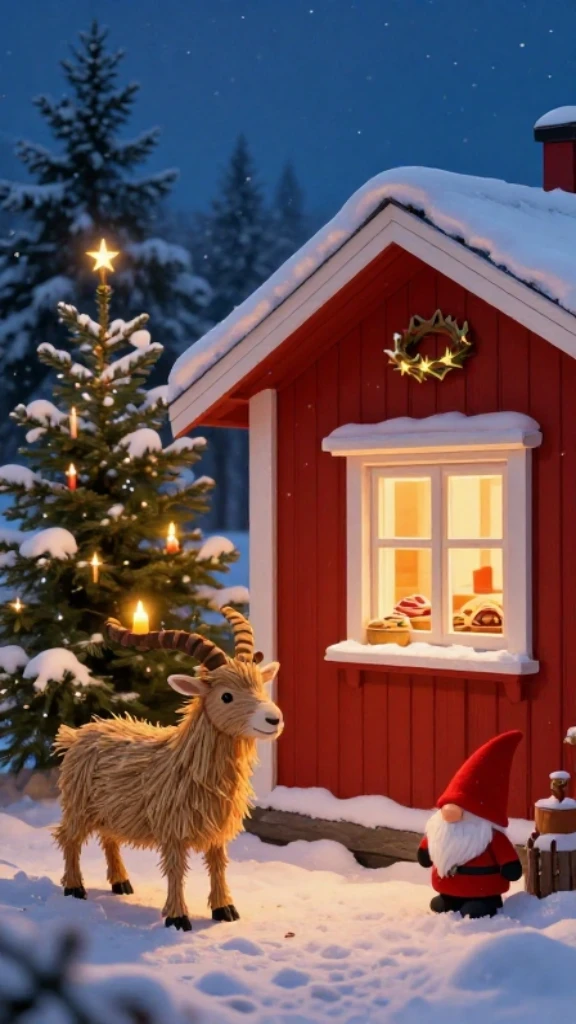
Fun Facts About Christmas in Sweden for Students
- Sweden officially kicks off the Christmas season on the first Sunday of Advent, which is four Sundays before Christmas Eve, making their celebration last nearly a month.
- The Nobel Prize ceremonies happen in Stockholm on December 10th every year, adding an extra layer of prestige to Sweden’s winter festivities.
- Swedish students get almost two weeks off for Christmas break, typically from around December 20th to early January.
- Historically, Swedish children believed that Christmas gifts were delivered by small gnomes called “tomtar” rather than Santa Claus.
- The tradition of Advent candles in Sweden follows a specific order: one candle is lit on the first Sunday, two on the second, and so on until all four are glowing.
- Swedish Christmas markets, or “Julmarknad,” date back to medieval times and were originally held to stock up on winter supplies.
- In Swedish folklore, Christmas Eve is when the veil between worlds is thinnest, and supernatural beings roam freely.
- The Gävle Goat, a giant straw Christmas decoration, has been burned down 38 times since 1966, becoming an infamous Swedish Christmas tradition.
- Swedish universities close completely during Christmas, with even research labs going into hibernation mode for the holidays.
- Traditional Swedish Christmas involves more pagan elements than most European celebrations, blending old Norse customs with Christian traditions.
- December 13th, St. Lucia Day, is almost as important as Christmas itself in Swedish culture, featuring candlelit processions in schools nationwide.
- Swedish Christmas decorations favor natural materials like straw, wood, and red fabric rather than flashy commercial ornaments.
- The Swedish word for Christmas, “Jul,” comes from the Old Norse “jól,” a pagan midwinter festival celebrating the winter solstice.
- Swedish families traditionally make their own Christmas decorations during “pyssel” (craft) sessions in early December.
- In Sweden, Christmas Eve is the main celebration day, not Christmas Day like in many other countries.
- Swedish Christmas songs blend religious hymns with folk melodies that are hundreds of years old.
- The tradition of the Christmas ham in Sweden requires starting preparation days in advance with special brining and cooking techniques.
- Swedish students often participate in “julbord” buffets at school before break, featuring miniature versions of traditional dishes.
- Historically, Swedish farmers would leave out porridge for the tomte to ensure good fortune for their farms during winter.
- The Swedish Christmas calendar tradition, “Julkalendern,” features a daily TV show throughout December that the entire nation watches together.
- Swedish Christmas literature often features trolls, elves, and forest creatures rather than just reindeer and snowmen.
- In Sweden, it’s traditional to clean your entire house thoroughly before Christmas in a practice called “julstädning.”
- Swedish Christmas cards traditionally feature red cottages, snowy forests, and tomtar rather than Santa and his sleigh.
- The Swedish Academy holds special Christmas concerts featuring both classical and traditional folk music throughout December.
- Many Swedish families make their own candles for Christmas using traditional methods passed down through generations.
Fun Facts About Christmas in Sweden for Kids
- Swedish kids believe in the “Jultomten,” a Christmas gnome who looks like a tiny old man with a long white beard and red hat.
- On Christmas Eve, Swedish children watch Donald Duck cartoons at exactly 3 PM—it’s been a tradition since 1960 and almost the whole country tunes in!
- Swedish kids leave out a bowl of porridge for the Jultomten on Christmas Eve, just like other children leave cookies for Santa.
- The Swedish tradition of “dansa runt granen” means dancing around the Christmas tree while singing silly songs.
- In Sweden, children make paper decorations shaped like hearts, called “julhjärtan,” to hang on the tree.
- Swedish kids often dress up as “stjärngossar” (star boys) during December, wearing white robes and tall pointed hats with stars.
- On St. Lucia Day, Swedish children wake up super early to serve their parents coffee and saffron buns in bed.
- Swedish families hide a single almond in their rice pudding, and whoever finds it gets a special wish or a small prize.
- Kids in Sweden open their Christmas presents on Christmas Eve after dinner, not on Christmas morning.
- Swedish children make advent stars called “adventsstjärnor” to count down the days until Christmas.
- The Swedish Christmas calendar on TV tells a story in 24 episodes, one each day of December leading up to Christmas Eve.
- Swedish kids love making “pepparkakshus” (gingerbread houses) that are often more elaborate than regular gingerbread men.
- In Swedish Christmas tales, the tomte can play tricks on children who don’t behave or forget to leave out porridge.
- Swedish children sing a special song about small frogs when dancing around the Christmas tree—yes, frogs at Christmas!
- Kids in Sweden learn to ice skate early, and skating under the Christmas lights is a favorite holiday activity.
- Swedish Christmas stockings are called “julstrumpor” and are traditionally hung by the fireplace or doorway.
- Children in Sweden help make “lussekatter” (saffron buns shaped like the letter S) for St. Lucia Day celebrations.
- The tradition of “Kalle Anka” (Donald Duck) on Christmas Eve is so important that some Swedish kids think it’s the real start of Christmas.
- Swedish kids often make Christmas decorations from red and white felt, creating tiny tomtar and hearts.
- In Sweden, children sometimes receive small gifts throughout December in their advent calendars, not just chocolate.
- Swedish families often visit Christmas markets together where kids can ride ponies and drink warm apple juice.
- Swedish children learn that the Jultomten lives in the forest or barn, not at the North Pole.
- Kids in Sweden might see real reindeer at Christmas markets, as Sweden is home to indigenous Sami people who herd them.
- The Swedish tradition includes making “knäck” (toffee candy) that kids help stir and shape.
- Swedish children believe that animals can talk on Christmas Eve at midnight, adding magical wonder to the night.
Fun Facts About Christmas in Sweden for Preschoolers
- Swedish preschoolers love making simple paper chains in red and white to decorate their classrooms for Christmas.
- Little ones in Sweden sing “Björnen sover” (The Bear is Sleeping) at Christmas time with hand motions.
- Swedish toddlers help hang oranges stuck with cloves on the Christmas tree because they smell wonderful.
- Preschoolers in Sweden make easy tomte decorations using pinecones, cotton balls, and red felt.
- Swedish little ones learn that Jultomten is a friendly gnome who brings presents and isn’t scary at all.
- Tiny Swedish kids love stamping cookie dough with Christmas shapes like hearts, pigs, and stars.
- Swedish preschools have “lucia trains” where children dress in white and walk in a line holding candles (usually electric ones for safety).
- Little ones in Sweden learn simple Christmas songs with lots of “la la la” parts that are easy to sing.
- Swedish toddlers help sort through red and green craft supplies to make simple Christmas decorations.
- Preschoolers in Sweden often paint big paper Christmas trees and stick on cotton ball snow.
- Swedish little ones love the tradition of eating “risgrynsgröt” (rice porridge) with cinnamon and sugar on top.
- Tiny kids in Sweden practice being very quiet when the Jultomten delivers presents so they don’t scare him away.
- Swedish preschoolers make simple advent calendars with pockets containing small toys or treats.
- Little ones learn to say “God Jul” (Merry Christmas) in their cheerful little voices.
- Swedish toddlers enjoy stories about friendly forest animals celebrating Christmas together.
- Preschoolers in Sweden help light the first advent candle with their parents watching closely.
- Swedish little ones make handprint ornaments painted red with white dots to look like toadstools.
- Tiny Swedish kids love shaking bells and pretending to be the Jultomten’s helpers.
- Preschoolers in Sweden learn that sharing treats and being kind is what Christmas is really about.
- Swedish toddlers enjoy simple finger plays about stars twinkling and snow falling gently.
- Little ones in Sweden help set out the special porridge bowl for the Jultomten before bedtime.
- Swedish preschoolers love looking at picture books featuring red cottages covered in snow.
- Tiny kids in Sweden practice their dancing steps for circling around the Christmas tree.
- Swedish little ones make snow angels and pretend they’re Christmas angels watching over everyone.
- Preschoolers in Sweden learn that Christmas is a time when families stay warm and cozy together indoors.
Sweden Christmas Traditions
- “Julbord” is the Swedish Christmas buffet featuring at least 15 different dishes including herring, meatballs, ham, and various casseroles.
- Swedes celebrate “Lille Julafton” (Little Christmas Eve) on December 23rd, making the festivities last even longer.
- Drinking “julmust,” a special Swedish Christmas soda, is mandatory—Swedes consume about 45 million liters during the holiday season.
- The tradition of dipping bread in the ham broth, called “doppa i grytan,” happens before the Christmas meal begins.
- Swedish families watch “Kalle Anka och hans vänner önskar God Jul” (Donald Duck and Friends Wish You Merry Christmas) every Christmas Eve at 3 PM without fail.
- “Julskinka,” the Christmas ham, is glazed with mustard, breadcrumbs, and egg, then decorated with festive patterns.
- Swedes light real candles on their Christmas trees despite the fire risk, maintaining an old and somewhat dangerous tradition.
- The “julbock” (Christmas goat) made of straw is a traditional decoration dating back to pagan celebrations of Thor.
- Swedish Christmas includes eating “lutfisk,” dried fish treated with lye that has a jelly-like consistency and divides opinions dramatically.
- Families gather to watch the Christmas Eve service from Uppsala Cathedral broadcast on television at 5 PM.
- “Glögg,” Swedish mulled wine with almonds and raisins, is served warm throughout December at gatherings and markets.
- The tradition of “julklapp” involves wrapping gifts multiple times with silly poems giving clues about what’s inside.
- Swedish homes are decorated with red wooden Dala horses, representing good luck and traditional Swedish craftsmanship.
- “Janssons frestelse” (Jansson’s Temptation), a creamy potato and anchovy casserole, is mandatory at every julbord spread.
- Swedes preserve the tradition of making seven different kinds of cookies, called “sju sorters kakor,” for Christmas.
- The Christmas peace is declared from Turku Cathedral (formerly Swedish territory) and broadcast throughout Scandinavia on Christmas Eve.
- Swedish families often visit the graves of loved ones on Christmas Eve, decorating them with candles and evergreen branches.
- “Risgrynsgröt,” rice porridge with one hidden almond, determines who will marry next or receive good luck in the coming year.
- The Christmas season doesn’t officially end in Sweden until January 13th, Saint Knut’s Day, when the tree is “plundered” of treats.
- Swedish Christmas songs are sung while holding hands and walking around the Christmas tree in a circle.
- The tradition of having “sill” (pickled herring) in multiple varieties is non-negotiable at Swedish Christmas celebrations.
- Many Swedish families maintain the custom of decorating with sheaves of wheat for birds, called “julkärve,” placed outside.
- “Ris à la Malta,” a whipped cream and rice pudding dessert, appears on virtually every Swedish Christmas table.
- Swedes often bathe or sauna on Christmas Eve before the feast, a purification ritual with ancient origins.
- The Swedish Christmas celebration emphasizes togetherness and “mysig” (cozy) atmosphere over commercial excess.
Where to Spend Christmas in Sweden
- Stockholm’s Old Town (Gamla Stan) transforms into a fairy-tale Christmas wonderland with cobblestone streets lined with twinkling lights and festive decorations.
- The Christmas market at Skansen Open-Air Museum in Stockholm features traditional Swedish crafts, food, and live demonstrations of old customs.
- Gothenburg’s Liseberg amusement park becomes “Christmas at Liseberg” with five million lights creating Scandinavia’s largest Christmas display.
- The Ice Hotel in Jukkasjärvi offers a unique Christmas experience sleeping in rooms carved entirely from ice and snow.
- Uppsala, Sweden’s ancient capital, hosts beautiful Christmas markets near the massive cathedral and medieval streets.
- Malmö’s Christmas markets at Stortorget square feature the iconic red town hall as a stunning backdrop for holiday festivities.
- The medieval town of Visby on Gotland island offers a hauntingly beautiful Christmas with ruins and ancient churches covered in snow.
- Drottningholm Palace near Stockholm opens its Christmas market in the courtyard of Sweden’s royal residence.
- The Sami villages in Swedish Lapland provide an authentic Arctic Christmas with reindeer sledding and indigenous traditions.
- Lund’s Christmas market is one of Sweden’s oldest, dating back centuries with traditional crafts and Scandinavian delicacies.
- The copper mining town of Falun hosts a charming Christmas market in its historic World Heritage Site location.
- Örebro Castle hosts festive Christmas markets within its Renaissance-era walls and surrounding moats.
- Kalmar, with its impressive Renaissance castle, creates a royal Christmas atmosphere beside the Baltic Sea.
- Swedish Lapland offers opportunities to witness the Northern Lights during Christmas, adding magical colors to the celebration.
- The island of Marstrand near Gothenburg provides a coastal Christmas experience with harbor lights reflecting on winter waters.
- Karlskrona, Sweden’s naval city, decorates its baroque architecture and UNESCO World Heritage squares for Christmas.
- The university city of Lund combines student traditions with ancient Christmas customs in atmospheric medieval streets.
- Swedish ski resorts like Åre offer a sporty Christmas alternative with slopes, cozy lodges, and alpine celebrations.
- Rural Swedish villages provide the most authentic “stuga” (cottage) Christmas experience with deep snow and isolation.
- The kingdom’s many manor houses and castles often open for special Christmas tours and traditional celebrations.
- Swedish countryside churches host midnight masses with candlelight services that feel timeless and peaceful.
- Stockholm’s archipelago islands offer remote Christmas experiences accessible by boat or over ice when frozen.
- The northern town of Kiruna combines Christmas with spectacular winter darkness and the possibility of seeing reindeer.
- Swedish forest lodges provide “back to nature” Christmas experiences with log fires and traditional wood-heated saunas.
- Any small Swedish town with a preserved historical center offers authentic Christmas atmosphere without tourist crowds.
Weird Swedish Christmas Traditions
- The Gävle Goat has been burned down, attacked, or destroyed almost every year since 1966 despite increasingly elaborate security measures.
- Watching Donald Duck on Christmas Eve is so ingrained that missing it feels wrong to most Swedes—it’s almost a religious observance.
- Eating lutfisk, fish treated with lye that becomes gelatinous and smells strongly, remains popular despite being somewhat terrifying.
- The Christmas peace declaration broadcast includes a moment of silence for those who’ve died, bringing solemnity to festive joy.
- Swedish television essentially shuts down on Christmas Eve after the Donald Duck special, with minimal programming until the next day.
- The tradition of “plundering” the Christmas tree on January 13th involves eating all the decorative candies and cookies before throwing it out.
- Some Swedish families keep the Christmas ham bone and bury it in the garden for good luck in the coming year.
- The custom of jumping over seven fences on Christmas Eve to dream of your future spouse exists in rural Swedish folklore.
- Swedish Christmas involves a strange fixation on particular TV shows, including old British programs that most Brits have forgotten.
- The ritual of dipping bread in ham pot water before eating might seem odd but is fiercely defended by Swedish families.
- Some regions maintain the tradition of men dressing as frightening “yule goats” and going door to door demanding treats.
- The Swedish Christmas table includes both sweet and savory dishes mixed together, with no clear course separation.
- Lutfisk is often served with white sauce, green peas, and mustard in a combination that baffles non-Swedish palates.
- Some Swedish families practice the old custom of leaving windows open on Christmas Eve so spirits can pass through.
- The tradition of eating rice porridge from a communal pot while hoping for the almond creates intense family competition.
- Swedish Christmas punch, “glögg,” often contains enough alcohol to make the holiday suspiciously cheerful for adults.
- The persistence of lighting real candles on highly flammable dry Christmas trees seems to defy modern safety sensibilities.
- Some remote Swedish villages maintain the custom of firing guns on Christmas morning to scare away evil spirits.
- The Swedish obsession with having exactly seven types of cookies borders on compulsive for many families.
- Decorating with straw goats alongside Christian nativity scenes creates an interesting pagan-Christian hybrid celebration.
- The tradition of smorgasbord grazing for hours means Swedish Christmas dinner can last four or five hours easily.
- Some Swedish families keep Christmas decorations up until Easter if they’re feeling particularly lazy or sentimental.
- The custom of giving rhyming clue poems with gifts turns present-opening into an elaborate guessing game lasting hours.
- Swedish Christmas television programming includes British comedy shows from the 1970s that seem completely random to outsiders.
- The practice of visiting cemeteries on Christmas Eve is simultaneously beautiful and slightly macabre to foreign visitors.
How to Say Merry Christmas in Sweden
- “God Jul” (pronounced “goo yool”) is the standard way to wish someone Merry Christmas in Swedish.
- The literal translation of “God Jul” means “Good Yule,” connecting to ancient Norse winter celebrations.
- You can say “Glad Jul” as an alternative, which also means Merry Christmas and sounds slightly more cheerful.
- “Trevlig Jul” means “Pleasant Christmas” and works perfectly for more formal or business settings.
- To wish someone a happy holiday season generally, say “Trevliga helger” (pleasant holidays).
- “God fortsättning” means “Good continuation” and is used after Christmas through New Year’s to wish ongoing happiness.
- When toasting during Christmas, Swedes say “Skål!” (pronounced “skawl”) while making eye contact with everyone.
- “En riktigt God Jul” means “A really Merry Christmas” for emphasizing your warm wishes.
- In written Swedish Christmas cards, “Med vänliga julhälsningar” means “With friendly Christmas greetings.”
- If you want to add “and Happy New Year,” say “God Jul och Gott Nytt År” (Merry Christmas and Happy New Year).
- “Gott Nytt År” specifically means “Good New Year” when celebrating on December 31st.
- Swedish children often say “God Jul, God Jul!” repeatedly with excitement, doubling the greeting for emphasis.
- The more old-fashioned “En frögdefull jul” means “A joyful Christmas” but sounds quite formal and antiquated today.
- “Julhälsningar” by itself means “Christmas greetings” and works nicely in cards or messages.
- When visiting someone’s home during Christmas, you might say “Tack för jul” (Thanks for Christmas) when leaving.
- “God Jul tillsammans” means “Merry Christmas together” and emphasizes the communal aspect of the celebration.
- If you’re singing Christmas carols, you’ll hear “Vi önskar er en God Jul” (We wish you a Merry Christmas).
- Business emails often close with “God Jul och ledighet” (Merry Christmas and vacation) before the holidays.
- When making a Christmas toast, you can say “God Jul allesammans!” (Merry Christmas everyone!).
- “Fröjdefull jul” is another formal version meaning “Joyful Christmas” that appears in hymns and religious contexts.
- Text messages commonly use “G Jul!” as shorthand for “God Jul” among Swedish friends.
- “Ha en trevlig jul” means “Have a pleasant Christmas” and works for casual conversations.
- When bumping into neighbors during December, a simple “God Jul!” with a smile is perfectly appropriate.
- Swedish Christmas songs often start with “Nu är det jul igen” (Now it’s Christmas again) as a greeting phrase.
- The phrase “Riktig julstämning” means “Real Christmas atmosphere” and expresses when things feel perfectly festive.
Conclusion
There you have it—185+ intriguing views into how Sweden celebrates Christmas with its own wonderfully strange and endearing way!
Whether you’re going to visit Sweden during the holidays, want to add some Scandinavian flair to your own celebrations, or just love learning about foreign cultures, these Swedish Christmas customs indicate that the holiday season can be celebrated in countless unique ways.
From dancing around trees while chanting about frogs to regularly watching Donald Duck, Sweden clearly knows how to make Christmas unforgettable. So grab some glögg, wish everyone a hearty “God Jul,” and maybe consider adopting a friendly tomte for your own home—just don’t forget his porridge! 🎄