Looking to add some enigmatic, spine-tingling fun to your holiday gatherings? Black Christmas trivia is the perfect way to mingle holiday cheer with a hint of evil! Whether you’re holding a Christmas horror movie marathon or just want to test your pals on their knowledge of this cult classic slasher film, I’ve got you covered.
I’ll never forget the first time I watched Black Christmas—let’s just say I triple-checked my attic door that night! Get ready to dig into topics that’ll make you laugh, think, and maybe sleep with the lights on.
These trivia gems are excellent for parties, game nights, or just showing off your horror movie prowess!
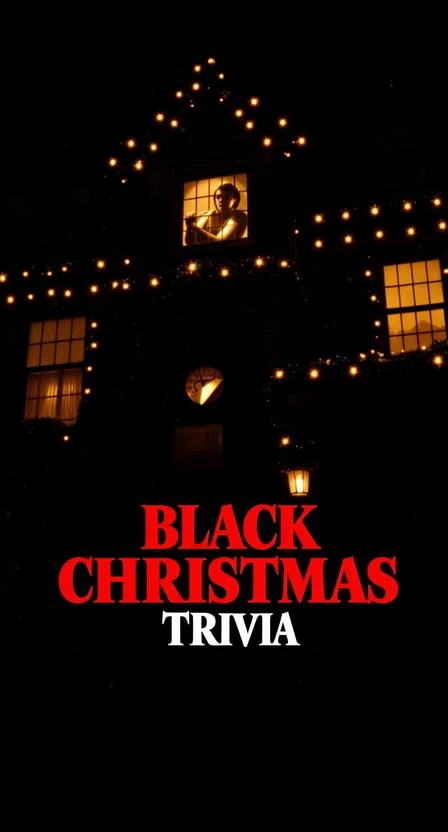
Fun Black Christmas Trivia Questions and Answers
Q: What year was the original Black Christmas film released?
A: 1974—making it one of the earliest slasher films ever made!
Q: Where does the movie Black Christmas primarily take place?
A: In a sorority house during the Christmas break.
Q: Who directed the original Black Christmas?
A: Bob Clark, who later directed the much lighter A Christmas Story.
Q: What is the name of the sorority house in Black Christmas?
A: Pi Kappa Sigma sorority house.
Q: What iconic Christmas song plays during the opening credits?
A: “Silent Night” with a creepy twist that sets the perfect eerie tone.
Q: What is the killer’s nickname in the original film?
A: Billy, though his identity remains a mystery throughout most of the movie.
Q: Which actress played Jess Bradford in the 1974 film?
A: Olivia Hussey, famous for her role as Juliet in Romeo and Juliet.
Q: What weapon does the killer primarily use in Black Christmas?
A: A variety of household items, including plastic bags and sharp objects.
Q: How does the killer enter the sorority house?
A: Through the attic window, staying hidden in the upper floors.
Q: What disturbing calls do the sorority sisters receive?
A: Obscene phone calls with multiple voices and disturbing sounds.
Q: Who was the first victim in the original Black Christmas?
A: Clare Harrison, who is killed in the attic early in the film.
Q: What does Jess discover about her boyfriend Peter during the movie?
A: He has a volatile temper and becomes a suspect in the murders.
Q: Which actress played the house mother Mrs. Mac?
A: Marian Waldman, who delivered a hilariously boozy performance.
Q: What is Mrs. Mac’s favorite hiding place for alcohol?
A: She hides bottles throughout the house, even in her knitting supplies!
Q: What profession does Jess’s boyfriend Peter pursue?
A: He’s a piano student and aspiring concert pianist.
Q: How many remake versions of Black Christmas have been made?
A: Two—one in 2006 and another in 2019.
Q: What makes the 1974 Black Christmas historically significant?
A: It’s considered one of the first slasher films, predating Halloween by four years.
Q: What Christmas decoration becomes particularly unsettling in the film?
A: A rocking chair with a creepy doll that keeps appearing in ominous scenes.
Q: What is Barb’s most memorable characteristic in the movie?
A: Her sarcastic wit and tendency to make inappropriate jokes at the worst times.
Q: Who plays the suspicious boyfriend Peter in the original film?
A: Keir Dullea, best known for his role in 2001: A Space Odyssey.
Q: What food item causes a darkly comedic moment during dinner?
A: Mrs. Mac’s questionable cooking and her liberal wine consumption during meals.
Q: How does the film cleverly use point-of-view shots?
A: Through the killer’s eyes, making viewers feel like they’re part of the horror.
Q: What Canadian city was Black Christmas filmed in?
A: Toronto, Ontario, giving it an authentic winter atmosphere.
Q: What makes the ending of Black Christmas so unsettling?
A: The killer is never caught and remains hidden in the house while the phone rings ominously.
Q: What innovative camera technique did the film pioneer?
A: The “killer’s perspective” shot that became a slasher film staple.
Funny Black Christmas Trivia Questions and Answers
Q: What does Mrs. Mac claim to see through the bottom of her glass?
A: Everything looks better, especially the holidays with enough sherry!
Q: What hilariously inappropriate joke does Barb make during a phone call?
A: She tells the obscene caller to “go find a wall socket” in very colorful language.
Q: What’s Mrs. Mac’s solution to every stressful situation?
A: Another drink—preferably hidden in her knitting basket or bedroom drawer!
Q: What does Barb suggest they do with the disturbing phone calls?
A: Keep him on the line and “find out what he’s wearing”—classic Barb humor.
Q: How does the film contrast Christmas cheer with horror?
A: Carolers sing outside while murders happen inside—talk about mixed vibes!
Q: What’s ironically funny about the police investigation?
A: They’re more interested in the sorority sisters’ personal lives than finding the killer.
Q: What does Mrs. Mac do when she discovers her alcohol is missing?
A: She launches a full investigation more thorough than the actual murder case.
Q: What awkward family moment happens during Christmas dinner?
A: Jess’s pregnancy discussion becomes everyone’s uncomfortable business.
Q: How does Barb describe the obscene phone caller?
A: As a “real professional” who should charge by the minute for his performances.
Q: What makes the carolers scene unintentionally funny?
A: Their cheerful singing while bodies are literally stacked in the attic above them.
Q: What’s Mrs. Mac’s reaction to being told to stop drinking?
A: She considers it a personal attack on her constitutional rights!
Q: How does Peter’s piano playing become comedic?
A: He aggressively pounds the keys during emotional outbursts like a musical tantrum.
Q: What does Barb call the Christmas party atmosphere?
A: “Forced festivity with a side of dysfunction”—basically every family gathering.
Q: What’s funny about the police lieutenant’s approach?
A: He’s more concerned about proper phone-tracing procedures than actual danger.
Q: How do the sisters react to their missing friend initially?
A: They assume she’s off with a boyfriend, completely missing the horror upstairs.
Q: What’s Mrs. Mac’s excuse for her constant drinking?
A: “It’s Christmas, dear!”—her catchphrase for literally every occasion.
Q: What makes the gift exchange scene awkward?
A: Opening presents while trying to ignore the creepy calls and missing housemates.
Q: How does Barb handle uncomfortable situations?
A: With sarcasm so sharp it could cut through the holiday ham.
Q: What’s ironic about the “Silent Night” soundtrack?
A: Nothing about this movie is silent or peaceful—false advertising at its finest!
Q: How do the neighbors respond to the chaos?
A: They’re completely oblivious, focused on their picture-perfect Christmas celebrations.
Q: What’s funny about the killer’s hiding spot?
A: Everyone checks the attic multiple times but somehow never finds him—ninja level stealth!
Q: How does the film mock traditional Christmas movies?
A: By turning every wholesome holiday trope into a nightmare scenario.
Q: What’s Mrs. Mac’s philosophy on the holidays?
A: “More spirits, less spirit”—referring to her drink of choice, obviously.
Q: How does Barb describe their sorority house dynamics?
A: “Like the Waltons, but with more murder and less moral guidance.”
Q: What makes the final phone ring so darkly humorous?
A: The killer’s literally been there the whole time—ultimate hide-and-seek champion!
Easy Black Christmas Trivia Questions and Answers
Q: Is Black Christmas a horror movie?
A: Yes, it’s a classic slasher horror film from the 1970s.
Q: When does the movie take place?
A: During Christmas break at a college sorority house.
Q: Who are the main characters?
A: College sorority sisters, including Jess, Barb, and their house mother Mrs. Mac.
Q: Is Black Christmas based on a true story?
A: It’s loosely inspired by urban legends about babysitters and mysterious phone calls.
Q: What holiday does the movie center around?
A: Christmas, specifically the days leading up to the holiday.
Q: Is the killer’s identity revealed in the original film?
A: No, the killer remains anonymous throughout the entire movie.
Q: What type of building is the main location?
A: A large sorority house on a college campus.
Q: Are there any sequels to the original Black Christmas?
A: No direct sequels, but there are two remake versions.
Q: Is Black Christmas suitable for children?
A: No, it’s rated R for violence, language, and adult themes.
Q: What decade was the original film made?
A: The 1970s, specifically released in 1974.
Q: Does anyone survive in Black Christmas?
A: Some characters survive, but the ending is intentionally ambiguous and unsettling.
Q: Where was the movie filmed?
A: In Toronto, Canada, during actual winter months.
Q: Is Black Christmas a Christmas comedy?
A: No, despite some dark humor, it’s primarily a horror thriller.
Q: How long is the original Black Christmas movie?
A: Approximately 98 minutes of suspenseful holiday horror.
Q: Does the movie have a happy ending?
A: Not really—it ends on a chilling, unresolved note that still haunts viewers.
Q: What makes Black Christmas different from other slasher films?
A: It was one of the first and influenced many horror movies that came after it.
Q: Is there a lot of gore in Black Christmas?
A: Less than modern horror films, focusing more on psychological terror and suspense.
Q: Can you watch Black Christmas with family?
A: Only if your family enjoys horror movies and everyone’s an adult!
Q: What rating did Black Christmas receive?
A: It was rated R for violence, disturbing content, and language.
Q: Is Black Christmas connected to other Christmas horror movies?
A: No direct connection, but it inspired the entire subgenre of holiday horror films.
Q: Do the sisters know who’s calling them?
A: No, the obscene phone calls remain a mystery throughout the film.
Q: Is there a final showdown with the killer?
A: Not in the traditional sense—the film subverts typical slasher expectations.
Q: What’s the main source of tension in the movie?
A: The threatening phone calls combined with the disappearance of sorority sisters.
Q: Does Black Christmas have jump scares?
A: Yes, but it relies more on atmosphere and suspense than cheap scares.
Q: Is the 2019 remake similar to the original?
A: It has a different tone and plot, focusing more on social commentary than pure horror.
Black Christmas Trivia Questions and Answers for Adults
Q: What controversial topic does Jess’s storyline address?
A: An unplanned pregnancy and her decision to have an abortion, rare for 1970s films.
Q: How does the film portray women’s autonomy?
A: Through Jess’s firm stance on her reproductive choices despite pressure from her boyfriend.
Q: What makes Peter a potentially abusive character?
A: His controlling behavior, violent outbursts, and attempts to dictate Jess’s pregnancy decision.
Q: How does the film subvert traditional gender roles?
A: Women are shown as independent, complex characters rather than helpless victims.
Q: What does Mrs. Mac’s alcoholism represent in the film?
A: Both comic relief and a darker commentary on loneliness during the holidays.
Q: How are the obscene phone calls described in adult terms?
A: They contain explicit sexual content and violent threats that shocked 1970s audiences.
Q: What psychological elements make the killer disturbing?
A: The multiple voices and childlike aspects suggest severe mental illness or dissociative identity disorder.
Q: How does the film address toxic masculinity?
A: Through Peter’s possessiveness and inability to accept Jess’s independent decisions.
Q: What’s the significance of the killer never being caught?
A: It reflects real-world fears that danger can lurk undetected in familiar spaces.
Q: How does Black Christmas comment on police effectiveness?
A: It satirizes law enforcement’s slow response and patronizing attitude toward women’s concerns.
Q: What makes the ending philosophically disturbing?
A: The unresolved horror suggests evil doesn’t always get punished or explained.
Q: How does the film explore isolation during holidays?
A: Characters remain at the sorority house due to broken families or troubled relationships.
Q: What’s the significance of the attic as the killer’s hideout?
A: It represents hidden dangers within supposedly safe domestic spaces.
Q: How does Barb’s character challenge 1970s norms?
A: Her unapologetic sexual frankness and refusal to be polite or ladylike.
Q: What does the film suggest about victim-blaming?
A: Police and others question the women’s behavior rather than focusing on the perpetrator.
Q: How are class differences portrayed in the movie?
A: Through Jess’s wealthy, judgmental father and the working-class detective dynamics.
Q: What makes the phone calls psychologically effective?
A: They violate the women’s privacy in their own home, creating pervasive anxiety.
Q: How does the film use voyeurism as a theme?
A: The killer’s point-of-view shots make viewers complicit in watching the victims.
Q: What’s disturbing about the “Agnes” references in calls?
A: They hint at the killer’s traumatic past without providing closure or explanation.
Q: How does Black Christmas reflect 1970s social anxieties?
A: Through fears about women’s liberation, changing moral values, and urban crime.
Q: What makes Jess’s final moments in the house terrifying?
A: She’s left alone, believing she’s safe when the killer is still present.
Q: How does the film critique holiday expectations?
A: By showing the pressure to maintain appearances while dealing with serious trauma.
Q: What’s significant about the lack of resolution?
A: It denies viewers catharsis, leaving them with lingering dread and unease.
Q: How does Peter’s artistic temperament mask danger?
A: His “passionate” personality excuses controlling and violent behavior patterns.
Q: What does the film say about believing women?
A: Authorities dismiss the sisters’ concerns until it’s too late, reflecting real-world patterns.
Black Christmas Trivia Questions and Answers Printable
Q: Who directed the original 1974 Black Christmas?
A: Bob Clark
Q: What is the main setting of the film?
A: A sorority house
Q: What year was Black Christmas first released?
A: 1974
Q: Who plays the protagonist Jess Bradford?
A: Olivia Hussey
Q: What Canadian city was the film shot in?
A: Toronto, Ontario
Q: What’s the house mother’s name?
A: Mrs. Mac (Mrs. MacHenry)
Q: What instrument does Peter play?
A: Piano
Q: What type of calls do the sisters receive?
A: Obscene and threatening phone calls
Q: Where does the killer hide in the house?
A: The attic
Q: Who is suspected of being the killer?
A: Peter, Jess’s boyfriend
Q: What Christmas carol features in the soundtrack?
A: “Silent Night”
Q: How many remake versions exist?
A: Two (2006 and 2019)
Q: What is Barb’s defining personality trait?
A: Sarcastic and outspoken
Q: What does Mrs. Mac frequently do?
A: Drink alcohol hidden around the house
Q: Who was the first victim?
A: Clare Harrison
Q: Is the killer’s identity revealed?
A: No, it remains a mystery
Q: What historical significance does the film have?
A: One of the first slasher films
Q: What nickname is used for the killer?
A: Billy
Q: What window does the killer use to enter?
A: The attic window
Q: How does the film end?
A: With the killer still in the house as the phone rings
Q: What decade influenced the film’s style?
A: The 1970s
Q: What makes the phone calls disturbing?
A: Multiple voices and violent threats
Q: How long is the original movie?
A: Approximately 98 minutes
Q: What rating does Black Christmas have?
A: R (Restricted)
Q: What later Christmas movie did Bob Clark direct?
A: A Christmas Story (1983)
Christmas Movie Trivia Questions and Answers
Q: How does Black Christmas differ from typical Christmas movies?
A: It’s a horror film rather than a family-friendly holiday story.
Q: What Christmas movie cliché does Black Christmas subvert?
A: The idea that Christmas settings are always warm, safe, and joyful.
Q: Which came first: Black Christmas or Halloween?
A: Black Christmas (1974) predates Halloween (1978) by four years.
Q: How did Black Christmas influence other horror films?
A: It established many slasher film conventions later used in the genre.
Q: What’s unique about Black Christmas as a holiday movie?
A: It proves Christmas can be the backdrop for genuine terror, not just cheer.
Q: Does Black Christmas share any themes with Home Alone?
A: Both feature homes during Christmas, but with vastly different outcomes!
Q: How does the film use Christmas decorations?
A: To create ironic contrast between festive symbols and horrific events.
Q: What other director has made both horror and Christmas films?
A: Bob Clark is rare in successfully directing both genres.
Q: How does Black Christmas compare to modern Christmas horror?
A: It’s more subtle and psychological than many contemporary holiday horror films.
Q: What Christmas movie tradition does the film include?
A: Carolers, gift exchanges, and holiday parties—all with sinister undertones.
Q: Can Black Christmas be considered a “Christmas classic”?
A: Absolutely, for horror fans—it’s essential holiday viewing!
Q: How does weather play a role in the film?
A: The cold, snowy setting adds to the isolation and atmospheric dread.
Q: What makes Black Christmas rewatchable during holidays?
A: Its perfect blend of Christmas atmosphere and genuine scares.
Q: How did critics initially receive Black Christmas?
A: Mixed reviews initially, but it’s now recognized as a groundbreaking classic.
Q: What Christmas movie element does it use effectively?
A: The emptying house during holiday break creates perfect isolation.
Q: Does Black Christmas have any heartwarming moments?
A: Very few—the sisterhood among characters provides brief warmth.
Q: How does it compare to Gremlins as holiday horror?
A: Black Christmas is darker and more serious than Gremlins’ dark comedy.
Q: What makes it a cult Christmas movie?
A: Its unique combination of holiday nostalgia and genuine terror.
Q: Has Black Christmas inspired other holiday horror films?
A: Yes, including films like Silent Night, Deadly Night and Krampus.
Q: What Christmas movie marathon would include Black Christmas?
A: Any horror-themed holiday lineup or alternative Christmas movie night.
Q: How does the film use Christmas music?
A: Traditional carols become unsettling when paired with horrific imagery.
Q: Is Black Christmas appropriate for Christmas Day viewing?
A: Only if your family appreciates horror—it might disturb the eggnog!
Q: What Christmas element is most prominent in the film?
A: The decorated sorority house with lights, trees, and festive decorations.
Q: How long after release did Black Christmas gain cult status?
A: It took years, but it’s now considered essential viewing for horror fans.
Q: What makes Black Christmas a “Christmas movie” debate topic?
A: Like Die Hard, people argue whether horror films can be true Christmas movies.
Best Black Christmas Trivia Questions and Answers
Q: What filmmaking technique did Black Christmas pioneer?
A: The killer’s point-of-view camera shots that became a slasher staple.
Q: Why is Black Christmas considered influential?
A: It established the “final girl” trope before Halloween popularized it.
Q: What makes the original better than its remakes?
A: Its restraint, atmosphere, and refusal to over-explain create lasting terror.
Q: How did the film achieve its eerie phone call effects?
A: Actor Nick Mancuso performed multiple voices to create disturbing, layered audio.
Q: What real-world inspiration influenced the film?
A: Urban legends about “the call is coming from inside the house.”
Q: Why is the killer’s anonymity so effective?
A: It makes the threat feel universal and impossible to escape or understand.
Q: What critical acclaim has Black Christmas received?
A: It’s now ranked among the greatest horror films and proto-slashers ever made.
Q: How did budget constraints improve the film?
A: Limited resources forced creative solutions that enhanced tension and mystery.
Q: What makes Olivia Hussey’s performance stand out?
A: Her nuanced portrayal of a strong woman facing impossible choices and terror.
Q: Why do horror scholars study Black Christmas?
A: It represents a turning point in horror cinema’s evolution and gender representation.
Q: What scene is considered most iconic?
A: The final shot of the ringing phone while Jess sleeps, unaware of danger.
Q: How does the film’s sound design enhance horror?
A: Silence, ambient noise, and sudden sounds create unbearable tension.
Q: What makes the sorority house setting perfect?
A: It’s both communal and isolating, familiar yet maze-like and vulnerable.
Q: Why has Black Christmas aged so well?
A: Its themes of women’s autonomy and unseen danger remain relevant today.
Q: What unexpected element adds to the horror?
A: The mundane Christmas preparations continuing while murders happen above.
Q: How does the film balance horror and social commentary?
A: It weaves serious themes into the horror without becoming preachy or heavy-handed.
Q: What makes the cinematography memorable?
A: Clever use of shadows, reflections, and architecture create constant unease.
Q: Why is the ambiguous ending so powerful?
A: It defies genre conventions and leaves viewers with existential dread.
Q: What performance is underrated in the film?
A: Margot Kidder’s Barb brings humor and humanity to a difficult role.
Q: How did Black Christmas influence John Carpenter?
A: Carpenter has acknowledged it as inspiration for Halloween’s structure.
Q: What makes the film’s pacing effective?
A: It builds slowly, allowing character development before escalating terror.
Q: Why do new generations discover Black Christmas?
A: Word-of-mouth and its historical importance keep bringing new fans.
Q: What makes it essential holiday horror viewing?
A: It perfectly captures how the holidays can amplify isolation and fear.
Q: How does Black Christmas handle violence?
A: It suggests more than it shows, making viewers’ imaginations do the work.
Q: What’s the ultimate legacy of Black Christmas?
A: It proved horror could be artful, influential, and terrifying without exploitation or excess.
Conclusion
There you have it—125+ Black Christmas trivia questions to make your holiday parties wonderfully grim! Whether you’re testing fellow horror aficionados, organizing a twisted game night, or just dazzling friends with your encyclopedic knowledge of cult movies, these questions span everything from the basic to the fantastically esoteric.
Use these for printable quiz sheets, party activities, or just casual conversation starters that’ll make folks ponder your holiday movie interests. Remember, nothing says “festive cheer” quite like discussing obscene phone calls and attic murders over eggnog.
Now, if you’ll excuse me, I need to go check my attic one more time—you know, just to be safe. Happy holidays, and may your Christmas be cheerful, bright, and far less murderous than the one in this video!