Christmas isn’t just about the glittering lights and gingerbread cookies—it’s about honoring the birth of Jesus Christ, and as Catholics, we’ve got some incredibly rich traditions to dive into!
I remember my grandmother quizzing us every Christmas Eve with the Nativity narrative before we could even think about unwrapping presents.
Whether you’re hosting a parish party, teaching CCD classes, or just want to stump your know-it-all cousin at dinner, these Catholic Christmas trivia questions will help you enjoy the season with both faith and fun.
Get ready to test your knowledge from the Annunciation to the Epiphany—and maybe discover something new along the way!
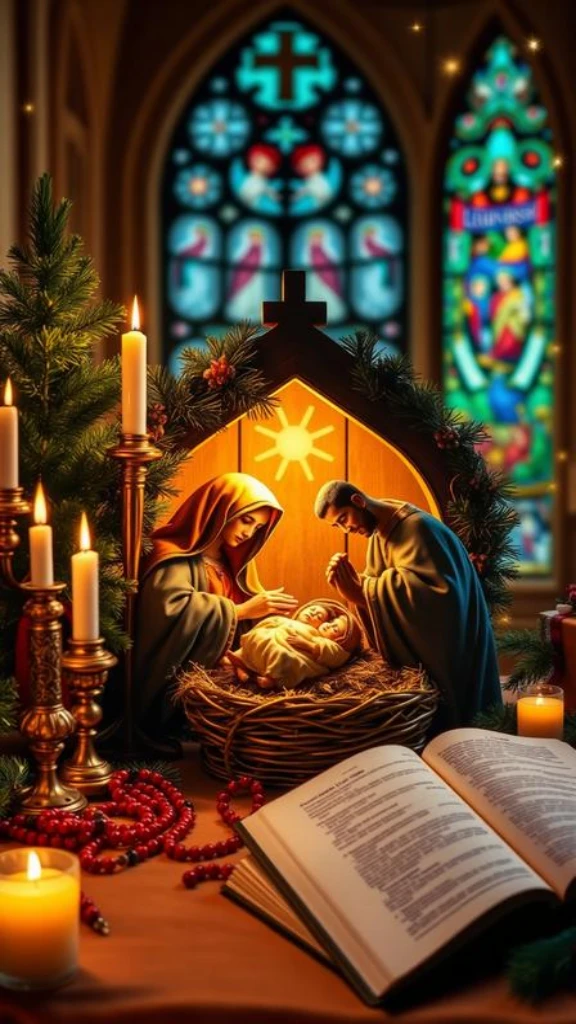
Free Catholic Christmas Trivia Questions and Answers
Q: What does the word “Christmas” literally mean?
A: “Christ’s Mass” – referring to the Catholic Mass celebrating Jesus’ birth.
Q: On what date does the Catholic Church celebrate Christmas?
A: December 25th.
Q: How many days are in the Catholic Christmas season?
A: Twelve days, from December 25th to January 6th (Epiphany).
Q: What liturgical color is used during the Christmas season?
A: White or gold, symbolizing purity and joy.
Q: Which Gospel tells the story of the Annunciation to Mary?
A: The Gospel of Luke.
Q: What is the Feast of the Immaculate Conception, celebrated before Christmas?
A: December 8th, honoring Mary being conceived without original sin.
Q: What does “Advent” mean in Latin?
A: “Adventus,” meaning “coming” or “arrival.”
Q: How many candles are on an Advent wreath?
A: Four candles around the wreath, plus one optional center candle (Christ candle).
Q: What is the name of the special Mass celebrated at midnight on Christmas?
A: Midnight Mass or Mass of the Angels.
Q: Which saint’s feast day is celebrated on December 26th?
A: Saint Stephen, the first Christian martyr.
Q: What is the O Antiphon tradition during Advent?
A: Seven special antiphons sung before the Magnificat from December 17-23.
Q: What prayer begins with “Hail Mary, full of grace”?
A: The Hail Mary (Ave Maria).
Q: Who was the Roman emperor when Jesus was born?
A: Caesar Augustus.
Q: What town was Jesus born in?
A: Bethlehem.
Q: What does “Emmanuel” mean?
A: “God with us.”
Q: Which archangel announced Jesus’ birth to Mary?
A: Gabriel.
Q: What was Joseph’s profession?
A: Carpenter (or craftsman/builder).
Q: How many Masses can a Catholic priest celebrate on Christmas Day?
A: Up to three: Midnight Mass, Dawn Mass, and Day Mass.
Q: What is the Christmas Octave?
A: The eight-day celebration from Christmas Day to January 1st.
Q: When does the Catholic Church celebrate the Feast of the Holy Family?
A: The Sunday after Christmas (or December 30th if Christmas falls on Sunday).
Catholic Christmas Trivia Questions and Answers
Q: Why do Catholics celebrate Christmas on December 25th?
A: While the exact date is unknown, the Church chose this date in the 4th century to celebrate Christ’s birth.
Q: What is the significance of the Christmas Star?
A: It guided the Magi to the infant Jesus in Bethlehem.
Q: How is the Christmas season different from Advent?
A: Advent is preparation; Christmas is celebration of Christ’s birth.
Q: What are the three Christmas Masses called?
A: Mass During the Night, Mass at Dawn, and Mass During the Day.
Q: What is a Jesse Tree?
A: An Advent tradition showing Jesus’ family tree through ornaments representing Biblical figures.
Q: Which pope officially declared December 25th as Christmas?
A: Pope Julius I in 350 AD.
Q: What is the Christmas Crib or Nativity scene called in Italian?
A: “Presepio.”
Q: Who is credited with creating the first Nativity scene?
A: Saint Francis of Assisi in 1223.
Q: What does the pink (rose) Advent candle represent?
A: Gaudete Sunday (the third Sunday of Advent), meaning “rejoice.”
Q: What is the proper Catholic greeting during Christmas?
A: “Merry Christmas” or “Peace on Earth.”
Q: When do Catholics traditionally put up their Nativity scene?
A: During Advent, but the baby Jesus is placed on Christmas Eve or Christmas Day.
Q: What is the Epiphany?
A: January 6th, celebrating the Magi visiting Jesus and revealing Him to the Gentiles.
Q: What gifts did the Magi bring to Jesus?
A: Gold, frankincense, and myrrh.
Q: What do the three gifts symbolize?
A: Gold for kingship, frankincense for divinity, myrrh for His death and resurrection.
Q: How many Magi visited Jesus according to the Bible?
A: The Bible doesn’t specify; tradition says three based on the three gifts.
Q: What is the Christmas Gospel reading from Luke?
A: Luke 2:1-14, describing Jesus’ birth in Bethlehem.
Q: What feast day follows Christmas Day?
A: The Feast of Saint Stephen on December 26th.
Q: What is celebrated on January 1st in the Catholic Church?
A: The Solemnity of Mary, Mother of God.
Q: Why is Christmas also called the Nativity?
A: “Nativity” means “birth” in Latin.
Q: What does the Christmas season teach Catholics?
A: That God became man to save humanity and dwells among us.
Q: What carol is based on Luke 2:14?
A: “Gloria in Excelsis Deo” (Glory to God in the Highest).
Q: When does the Catholic Christmas season officially end?
A: With the Feast of the Baptism of the Lord (Sunday after Epiphany).
Easy Catholic Christmas Trivia Questions and Answers
Q: Who is the baby in the Nativity scene?
A: Baby Jesus.
Q: What did Mary and Joseph use as a crib for Jesus?
A: A manger (animal feeding trough).
Q: Who appeared to the shepherds in the fields?
A: An angel of the Lord.
Q: What did the angel tell the shepherds?
A: That the Savior, Christ the Lord, was born.
Q: Where were Mary and Joseph traveling from?
A: Nazareth to Bethlehem.
Q: Why did they travel to Bethlehem?
A: For the Roman census.
Q: What animals are usually shown in the Nativity scene?
A: An ox and a donkey (though not mentioned in Scripture).
Q: What color vestments do priests wear at Christmas Mass?
A: White or gold.
Q: What is the name of Jesus’ mother?
A: Mary (the Blessed Virgin Mary).
Q: What is the name of Jesus’ earthly father?
A: Joseph (Saint Joseph).
Q: What do we call the season before Christmas?
A: Advent.
Q: How many weeks is Advent?
A: Four weeks.
Q: What prayer do Catholics say with rosary beads?
A: The Rosary.
Q: What famous Christmas carol mentions “Silent Night”?
A: “Silent Night” (Stille Nacht) – written by an Austrian priest.
Q: Who sang “Glory to God in the highest”?
A: A multitude of heavenly angels.
Q: What do the letters “IHS” on church decorations mean?
A: A monogram for Jesus’ name in Greek.
Q: What is the Christmas proclamation called?
A: The Martyrology or Kalenda.
Q: What is Christmas Eve called in some Catholic traditions?
A: The Vigil of the Nativity.
Q: What special blessing do Catholics receive on Christmas?
A: The Papal blessing “Urbi et Orbi.”
Q: What food is traditionally blessed at Christmas in some cultures?
A: The Christmas meal, oplatki (wafers), or bread.
Catholic Christmas Trivia Questions and Answers for Adults
Q: What theological concept does the Incarnation represent?
A: God becoming human in the person of Jesus Christ.
Q: Which ecumenical council affirmed Christ’s divinity and humanity?
A: The Council of Chalcedon (451 AD).
Q: What is the liturgical significance of Christmas being a solemnity?
A: It’s one of the highest-ranking feast days in the Church calendar.
Q: How does Catholic theology view Mary’s role in the Christmas story?
A: As the Theotokos (God-bearer), giving flesh to the Word of God.
Q: What does the Catechism say about the virginal conception?
A: Mary conceived Jesus by the Holy Spirit without human seed (CCC 496-498).
Q: Why is Christmas sometimes called the “Second Creation”?
A: Because Christ’s birth represents God’s new creative act of redemption.
Q: What is the connection between Christmas and Easter?
A: Both celebrate the Paschal Mystery—Christ’s birth initiates His redemptive mission completed at Easter.
Q: How many Christmas sermons did Saint Augustine preach?
A: At least 29 documented sermons on the Nativity.
Q: What did Saint Bernard of Clairvaux say about Christ’s birth?
A: “He became what we are to make us what He is.”
Q: What is the theological term for Christ’s two natures?
A: Hypostatic Union—fully God and fully man in one person.
Q: Why was Jesus’ birth in a stable significant?
A: It demonstrates God’s humility and solidarity with the poor.
Q: What prophecy from Isaiah foretells the virgin birth?
A: Isaiah 7:14 – “Behold, a virgin shall conceive.”
Q: What does Micah 5:2 predict about Jesus?
A: That the Messiah would be born in Bethlehem.
Q: How does Christmas fulfill Old Testament typology?
A: Jesus is the new Adam, born of the new Eve (Mary), restoring what was lost.
Q: What is the significance of Christ being “wrapped in swaddling clothes”?
A: It prefigures His burial cloths and resurrection.
Q: Why is the census significant theologically?
A: It shows God using history and human events to fulfill His divine plan.
Q: What is the “Kenosis” related to Christmas?
A: Christ’s self-emptying, taking on human nature (Philippians 2:6-7).
Q: How does the Christmas liturgy connect to Jewish tradition?
A: It fulfills messianic prophecies and represents the new covenant.
Q: What is the spiritual meaning of the Magi’s journey?
A: Representing the Gentiles seeking Christ and the universal call to salvation.
Q: Why do Catholics emphasize the “reason for the season”?
A: To combat secularization and remember Christmas is fundamentally about Christ’s birth, not commercialism.
Catholic Christmas Trivia Questions and Answers for Kids
Q: What holiday celebrates Jesus’ birthday?
A: Christmas!
Q: Who told Mary she would have a baby?
A: Angel Gabriel.
Q: What did Mary say when the angel visited her?
A: “Let it be done to me according to your word.”
Q: Who was Jesus’ mommy?
A: Mary.
Q: Who was Jesus’ daddy on earth?
A: Joseph.
Q: Where was baby Jesus born?
A: In a stable in Bethlehem.
Q: What did the shepherds hear the angels say?
A: “Glory to God in the highest and peace on earth!”
Q: What did the shepherds do after seeing Jesus?
A: They told everyone about Him!
Q: What special visitors came from far away?
A: The Three Wise Men (Magi).
Q: What did they follow to find Jesus?
A: A bright star in the sky.
Q: What gifts did the Wise Men bring?
A: Gold, frankincense, and myrrh.
Q: What is the little house scene with baby Jesus called?
A: A Nativity scene or manger scene.
Q: What do we light during the four weeks before Christmas?
A: Advent candles on the Advent wreath.
Q: What prayer do we say to Mary at Christmas?
A: The Hail Mary.
Q: Why did Jesus come to earth as a baby?
A: To save us and show us God’s love!
Q: What special Mass do families go to on Christmas?
A: Christmas Mass.
Q: What color do we wear at church during Christmas?
A: White or gold (for joy and celebration).
Q: Can you name a Christmas carol about baby Jesus?
A: “Away in a Manger” or “Silent Night.”
Q: What does “Emmanuel” mean?
A: God is with us!
Q: Why do we give gifts at Christmas?
A: To remember the gifts given to Jesus and to share God’s love with others.
Catholic Christmas Trivia Questions and Answers for Hard
Q: What is the precise Latin title for the Midnight Mass?
A: “Missa in Nocte” or “In Nativitate Domini.”
Q: Which biblical scholar translation first introduced “Christmas” into English?
A: The term evolved from Old English “Cristes Maesse” in the 11th century.
Q: What is the connection between the Roman Sol Invictus festival and Christmas?
A: Some scholars suggest December 25th was chosen to Christianize the pagan winter solstice celebration.
Q: What does the “Chronograph of 354” reveal about Christmas?
A: It’s the earliest documented reference to December 25th as Christ’s birth date.
Q: What is the theological distinction between Christ’s eternal generation and temporal birth?
A: Eternal generation is His divine procession from the Father; temporal birth is His human incarnation.
Q: Which Church Father wrote extensively about the perpetual virginity of Mary?
A: Saint Jerome, defending it against Helvidius.
Q: What is the liturgical sequence sung at Christmas Mass?
A: There isn’t a required sequence, but “Laetabundus” was historically used.
Q: How does the Roman Martyrology describe Christ’s birth date calculation?
A: Through theological computation connecting His conception (Annunciation) to His death.
Q: What is the relationship between Christmas and the Byzantine “Theophany”?
A: Eastern churches originally celebrated Christ’s birth and baptism together on January 6th.
Q: Which papal encyclical discusses the mystery of the Incarnation?
A: “Redemptoris Mater” by Pope John Paul II.
Q: What is the “Protevangelium of James” and its Christmas connection?
A: An apocryphal text providing details about Mary’s life and Jesus’ birth narrative.
Q: How does Aquinas explain the fittingness of Christ’s birth timing?
A: Through divine providence, choosing the time when the world was most prepared.
Q: What is the “Kalenda” proclamation’s astronomical reference?
A: It dates creation and Christ’s birth cosmically, connecting salvation history to world history.
Q: Which Christmas controversy involved the Council of Tours in 567 AD?
A: Establishing the Christmas season and fasting requirements.
Q: What is the theological significance of Christ being born “in the fullness of time”?
A: God’s perfect timing when Roman peace, Greek language, and Jewish expectation converged.
Q: How does patristic exegesis interpret Luke 2:7’s “no room in the inn”?
A: As humanity’s rejection of God and the world’s inhospitality to its Creator.
Q: What is the liturgical rank of Christmas compared to Easter?
A: Both are solemnities, but Easter is the “Feast of Feasts” and supreme celebration.
Q: Which medieval practice involved the “Feast of Fools” near Christmas?
A: A controversial festival where lower clergy parodied church hierarchy (later suppressed).
Q: How does Bonaventure’s theology explain the poverty of Christ’s birth?
A: As perfect kenotic love, embracing total humility to elevate humanity.
Q: What is the connection between Christmas and the Jewish Feast of Dedication?
A: Some scholars note Jesus’ conception may align with Hanukkah, symbolizing the new temple.
Best Catholic Christmas Trivia Questions and Answers
Q: Why is Christmas considered the “Feast of Love”?
A: It celebrates God’s ultimate act of love—sending His Son to save humanity.
Q: What makes the Christmas story unique among world religions?
A: God Himself became human, sharing in our nature completely.
Q: How does the Christmas mystery reveal God’s character?
A: It shows His humility, mercy, and desire for intimate relationship with humanity.
Q: What is the central message of the Christmas Gospel?
A: “Peace on earth to people of good will” and God’s favor toward humanity.
Q: Why do Catholics emphasize the Nativity scene?
A: It makes the mystery tangible and helps us contemplate the Incarnation.
Q: What is the relationship between Christmas and the Eucharist?
A: Both involve Christ giving Himself—first in the flesh, continually in the sacrament.
Q: How should Catholics celebrate Christmas according to Church teaching?
A: With Mass, family prayer, charity, and joyful celebration honoring Christ.
Q: What is the “Christmas grace” Catholics pray for?
A: That we may become more Christlike and grow in divine life.
Q: Why is Mary so central to the Christmas story?
A: Through her “fiat” (yes), she enabled the Incarnation to occur.
Q: What does Christmas teach about human dignity?
A: That God valued humanity enough to assume our nature entirely.
Q: How is Christmas connected to Baptism?
A: Christ’s birth initiates the redemption completed through His death and our rebirth in Baptism.
Q: What is the missionary dimension of Christmas?
A: Like the shepherds and Magi, we’re called to share the Good News.
Q: Why do Catholics sing “O Come, O Come, Emmanuel”?
A: It expresses the ancient longing for the Messiah that Christmas fulfills.
Q: What is the eschatological dimension of Christmas?
A: Christ’s first coming points to His second coming in glory.
Q: How does Christmas challenge materialism?
A: By showing God chose poverty and simplicity over worldly wealth.
Q: What is the family dimension of Christmas?
A: The Holy Family models domestic virtue and sanctity.
Q: Why is the Christmas star important symbolically?
A: Christ is the “Light of the World,” guiding us from darkness.
Q: What virtue does the Christmas story most emphasize?
A: Humility—God becoming a helpless infant for our sake.
Q: How does Christmas fulfill Jewish messianic expectation?
A: Jesus is the promised Davidic king and suffering servant.
Q: What is the ultimate purpose of celebrating Christmas?
A: To glorify God, grow in faith, and experience the joy of salvation.
Q: What does Pope Francis say about Christmas?
A: That it’s not about gifts and consumption, but welcoming Christ into our hearts.
Q: How can Catholics make Christmas more meaningful?
A: Through prayer, Scripture reading, works of mercy, and keeping Christ at the center.
Q: What is the most important Christmas tradition for Catholics?
A: Attending Mass and celebrating the Eucharist.
Q: What question should we ask ourselves at Christmas?
A: “Have I made room for Jesus in my heart and life?”
Q: What is the lasting message of Christmas?
A: God is with us, loves us infinitely, and desires our salvation and eternal joy.
Conclusion
There you have it—a treasure trove of Catholic Christmas trivia to teach, challenge, and delight everyone from your CCD students to your theology-loving uncle! Whether you’re holding a parish quiz night, seeking conversation starters at Christmas dinner, or simply improving your personal awareness of this lovely season, these questions help us recall what actually matters.
Christmas isn’t just a date on the calendar; it’s the celebration of God breaking into human history with love so profound He became one of us. So go ahead, share these questions, stump your friends, teach your kids, and most importantly, let every answer take you back to the manager where it all began.
Merry Christmas, and may your season be filled with faith, family, and a few “aha!” moments! After all, learning more about Jesus’ birth will only help us love Him more—and that’s the best present of all!