There’s something special about Christmas carols that turns even the grumpiest Scrooge into a humming holiday lover. Whether you’re singing out “Jingle Bells” in the shower or uncovering amazing information about Dickens’ timeless tale, these festive facts are here to sleigh your curiosity!
I remember the first moment I realized “A Christmas Carol” wasn’t just a story—it was a cultural revolution cloaked in ghost stories and redemption. So grab some hot cocoa, sit up by the fire, and let’s unwrap over 200 amusing facts that’ll make you the star of every holiday gathering!
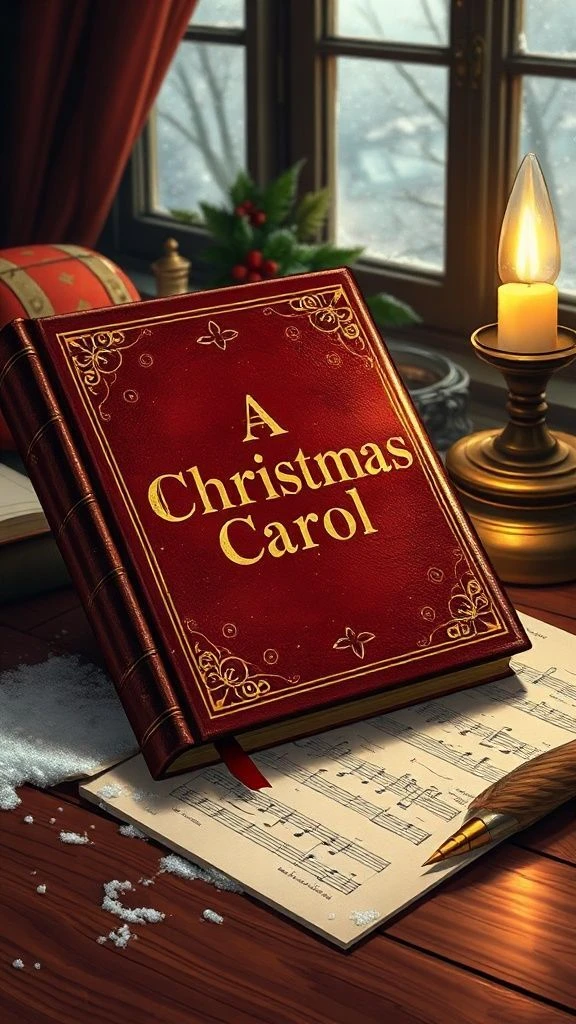
10 Interesting Facts About Christmas Carol
- Charles Dickens wrote “A Christmas Carol” in just six weeks during October and November 1843, fueled by financial pressure and creative passion.
- The novella was published on December 19, 1843, and sold out its first edition of 6,000 copies by Christmas Eve—talk about perfect timing!
- Dickens actually performed dramatic readings of “A Christmas Carol” 127 times before his death, making him the original one-man show superstar.
- The phrase “Bah! Humbug!” became so popular after publication that it entered everyday Victorian vocabulary as the ultimate expression of holiday grumpiness.
- Scrooge’s transformation helped popularize the modern concept of Christmas as a family-centered holiday focused on charity and goodwill rather than just religious observation.
- The book was so expensive to produce with its hand-colored illustrations that Dickens made less profit than expected despite its massive success.
- Within months of publication, eight theatrical adaptations were already playing in London—no copyright laws meant instant fan fiction everywhere!
- Dickens chose the name “Scrooge” possibly from the word “scrouge,” meaning to squeeze or press, perfectly capturing his penny-pinching personality.
- The Ghost of Christmas Present sits atop a throne of food, symbolizing abundance and generosity—quite the opposite of Scrooge’s empty pantry philosophy.
- “A Christmas Carol” has never been out of print since its first publication, making it one of the most enduring stories in English literature.
- Dickens wrote the story partly in response to a government report about child labor that deeply disturbed him—social justice wrapped in supernatural storytelling.
- The original manuscript was sold at auction in 2001 for £1.5 million and now resides in the Morgan Library & Museum in New York.
- Tiny Tim’s famous line “God bless us, every one!” wasn’t meant to be the emotional climax—it just naturally became the heart-tugger we all remember.
- Dickens insisted on specific illustrations, rejecting several drafts until John Leech created the iconic images we associate with the characters today.
- The story was initially titled “A Christmas Carol in Prose, Being a Ghost Story of Christmas”—quite the mouthful for a holiday classic!
- Scrooge’s redemption arc takes place in a single night, making it one of literature’s fastest character transformations from miser to philanthropist.
- The chains worn by Jacob Marley were described in such detail that they became a powerful Victorian symbol of the weight of greed.
- Dickens performed his final public reading of “A Christmas Carol” on March 15, 1870, just three months before his death at age 58.
- The book helped revive many old Christmas traditions in England that had been fading, essentially making Dickens the savior of Victorian Christmas.
- Modern economists have analyzed Scrooge’s wealth and calculated he’d be worth approximately $1.7 million in today’s currency—not bad for a coal-counting clerk employer!
Facts About Christmas Carol for Kids
- Tiny Tim walks with a crutch and captured hearts worldwide, teaching kids that heroes come in all sizes and abilities.
- The Ghost of Christmas Past looks different in every adaptation—sometimes young, sometimes old, always mysterious and glowing!
- Scrooge’s first name is Ebenezer, which actually means “stone of help” in Hebrew—ironic for someone who refused to help anyone at first.
- The story teaches that it’s never too late to change and become a better person, even if you’ve been grumpy for years.
- Fezziwig, Scrooge’s old boss, throws the best Christmas party ever with dancing, food, and fun—showing that kindness costs less than you think.
- Bob Cratchit, Scrooge’s clerk, has six children, including Tiny Tim, and works for very little money in a freezing cold office.
- The three ghosts visit Scrooge in one night, taking him on a magical journey through his past, present, and future.
- Scrooge keeps his office so cold that Bob Cratchit has to warm his hands over a single candle—definitely not employee of the month material!
- After his transformation, Scrooge becomes like a second father to Tiny Tim, proving that family isn’t just about blood relations.
- The story is set in London during winter, with snow-covered streets and frosted windows creating the perfect Christmas atmosphere.
- Jacob Marley was Scrooge’s business partner who died seven years before the story begins and comes back as a ghost in chains.
- Scrooge wears a nightcap to bed and says “Bah! Humbug!” whenever anyone mentions Christmas—he’s basically the original Grinch!
- The Ghost of Christmas Yet to Come doesn’t speak at all, just points dramatically at graves and shadows—super spooky!
- Kids in Victorian times worked long hours in terrible conditions, which is why Tiny Tim’s story was so important to readers.
- The story shows that money can’t buy happiness, but generosity and love can make you the richest person in the world.
- Scrooge’s nephew Fred keeps inviting him to Christmas dinner every year, even though Scrooge always says no—that’s true Christmas spirit!
- When Scrooge finally wakes up on Christmas morning, he’s so happy he doesn’t even know what day it is—pure joy overload!
- The prize turkey Scrooge buys for the Cratchits is described as being as big as Tiny Tim—now that’s a feast!
- Belle was Scrooge’s girlfriend who left him because he loved money more than her—a lesson about priorities that kids understand.
- The story reminds us that Christmas is about kindness, family, forgiveness, and helping others—values that never go out of style.
When Was a Christmas Carol Written and Set
- Charles Dickens began writing “A Christmas Carol” in October 1843, driven by both artistic inspiration and the need for financial success.
- The entire novella was completed by late November 1843, making it one of the fastest major works Dickens ever produced.
- The story is set in Victorian London during the 1840s, the same era in which it was written, giving it immediate contemporary relevance.
- Dickens walked the streets of London at night while writing, absorbing the atmosphere that would bring his winter setting to life.
- The publication date of December 19, 1843, was strategically chosen to catch the Christmas shopping season—marketing genius at work!
- The story takes place over Christmas Eve and Christmas Day, with Scrooge’s supernatural experiences happening in a single transformative night.
- Victorian England in the 1840s was experiencing rapid industrialization, creating the economic inequality Dickens critiqued through Scrooge’s character.
- Dickens wrote the story during a time when Christmas wasn’t widely celebrated in England—his tale helped change that cultural landscape.
- The harsh winter of 1840-1843 influenced Dickens’ vivid descriptions of cold, frost, and the importance of warmth and charity.
- Historical records suggest the story is set specifically in December 1843, making it a real-time narrative for its first readers.
- Dickens drew inspiration from his own childhood poverty when creating the Cratchit family’s struggles with money and hardship.
- The setting reflects the Poor Law Amendment Act of 1834, which Dickens opposed and criticized through Scrooge’s initial attitude toward the poor.
- Victorian London’s Christmas markets, carol singers, and festive traditions are beautifully captured in the story’s atmospheric descriptions.
- The time period featured gas lighting and coal fires, both prominently mentioned as Scrooge navigates his dark, cold counting-house.
- Dickens completed the manuscript just weeks before publication, barely leaving time for the elaborate illustrations he demanded.
- The story’s setting during the early Victorian era means it captures Christmas customs that were just beginning to be standardized across England.
- References to workhouses and debtors’ prisons reflect real institutions that Dickens personally feared after his father’s imprisonment for debt.
- The foggy, snowy London streets described in the book were typical of 1840s winters, creating an authentic sense of place and time.
- Writing during autumn and publishing before winter’s peak was risky, but Dickens’ confidence in his ghost story paid off spectacularly.
- The tale’s timeless quality comes from being both historically specific to the 1840s and universally applicable to any era’s social issues.
What Is a Christmas Carol
- “A Christmas Carol” is a novella—shorter than a novel but longer than a short story—making it the perfect length for a cozy reading session.
- It’s essentially a ghost story with a moral lesson, blending supernatural elements with social commentary about wealth and poverty.
- The work is divided into five “staves” instead of chapters, using musical terminology to emphasize its carol-like, lyrical structure.
- At its heart, it’s a redemption story about a cold-hearted miser who learns to embrace compassion, generosity, and human connection.
- The narrative follows Ebenezer Scrooge through visits from three spirits who show him his past, present, and potential future.
- It’s considered one of the earliest examples of modern Christmas literature that emphasizes secular values like charity alongside religious themes.
- The story popularized many Christmas traditions we take for granted today, including family gatherings, festive meals, and charitable giving.
- “A Christmas Carol” is also a social protest novel, highlighting the struggles of the working class and criticizing Victorian economic policies.
- The term “Christmas carol” itself refers to festive songs, and Dickens structured his story to flow like a song with recurring themes and rhythms.
- It’s a transformation tale that proves personal change is possible at any age, regardless of how set in one’s ways they might be.
- The work combines realism with fantasy, grounding its supernatural elements in the very real world of Victorian London’s streets and shops.
- Psychologically, it explores themes of regret, isolation, fear of death, and the human need for meaningful relationships beyond material wealth.
- The novella serves as both entertainment and education, teaching moral lessons without feeling preachy or heavy-handed to readers.
- It’s a time-travel story before time travel was a common literary device, using spirits to transport Scrooge through different temporal periods.
- The narrative is essentially about awakening—both literally, as Scrooge wakes from his night of visions, and metaphorically, as he awakens to life’s true values.
- “A Christmas Carol” functions as a mirror for society, reflecting back the consequences of greed, indifference, and social inequality.
- It’s a story about second chances, proving that redemption is always available to those willing to genuinely change their hearts and actions.
- The work blends humor with horror, mixing Scrooge’s comedic grumpiness with genuinely frightening moments involving death and despair.
- Structurally, it’s a circular narrative—beginning and ending on Christmas, with Scrooge’s journey completing a full transformation arc.
- Ultimately, it’s a celebration of Christmas spirit, not just as a holiday, but as a philosophy of kindness, joy, and generosity that should last year-round.
When Was a Christmas Carol Set
- The story unfolds on Christmas Eve, specifically December 24th, in Victorian London during the early 1840s.
- The narrative begins seven years after Jacob Marley’s death, establishing the story’s timeline at a specific point in Scrooge’s life of isolation.
- Most scholars agree the tale is set in 1843, the same year it was written and published, giving it contemporary urgency for original readers.
- The cold, foggy atmosphere places the action during a typical harsh English winter when coal fires and warm hearths were essential.
- Victorian London serves as the backdrop, with its cobblestone streets, gas lamps, and stark divide between wealthy and impoverished neighborhoods.
- The Ghost of Christmas Past takes Scrooge back approximately 30-40 years, revealing his youth and young adulthood in earlier decades.
- Fezziwig’s warehouse party scene is set in the Georgian or early Victorian period, showing a more jovial business culture than Scrooge maintains.
- The present-day scenes with Bob Cratchit’s family occur in humble Camden Town lodgings, reflecting working-class life of the 1840s.
- The Ghost of Christmas Yet to Come shows a potential future only days or weeks away, emphasizing the immediacy of Scrooge’s need to change.
- References to Poor Laws, workhouses, and prisons anchor the story firmly in the social realities of 1830s-1840s England.
- The cornhill district where Scrooge’s counting-house sits was London’s financial center, making it the perfect location for a wealthy miser.
- Belle’s scene in the past shows a younger, ambitious Scrooge choosing business over love during the 1810s or 1820s.
- The story’s Christmas Day conclusion takes place on December 25th, with church bells ringing and families gathering for holiday celebrations.
- London’s winter markets, mentioned throughout, were seasonal events where people purchased geese, puddings, and festive decorations.
- The time period featured emerging middle-class prosperity alongside desperate poverty, creating the social tension Dickens addresses.
- Tiny Tim’s potential death is predicted for the next Christmas, making the future vision approximately one year ahead.
- The setting during early Victorian England captures a moment when Christmas customs were being standardized and commercialized.
- Scrooge’s chambers are located in a building that once belonged to his deceased partner, suggesting a setting steeped in past business history.
- The fog and frost described throughout create a winter wonderland atmosphere while also symbolizing Scrooge’s cold emotional state.
- The story concludes with the promise of many future Christmases, suggesting the transformative night’s effects will last for years to come.
Fun Facts About Christmas Carols
- “Silent Night” was first performed on Christmas Eve 1818 in Austria with guitar accompaniment because the church organ was broken—happy accidents make history!
- “Jingle Bells” was originally written for Thanksgiving, not Christmas, and was titled “One Horse Open Sleigh” when published in 1857.
- The song “The Twelve Days of Christmas” actually refers to the twelve days between Christmas and Epiphany, not days before Christmas.
- “Good King Wenceslas” is based on a real historical figure—Duke Wenceslaus I of Bohemia, known for his charitable acts toward the poor.
- The melody of “What Child Is This?” comes from the English folk song “Greensleeves,” supposedly written by King Henry VIII himself.
- “Rudolph the Red-Nosed Reindeer” was created in 1939 as a marketing gimmick for Montgomery Ward department stores—capitalism meets Christmas magic!
- The highest-selling Christmas song of all time is Bing Crosby’s “White Christmas,” with over 50 million copies sold worldwide.
- “O Holy Night” was the first song ever broadcast on radio on Christmas Eve 1906, making it both ancient and futuristic simultaneously.
- “Carol of the Bells” is based on a Ukrainian folk chant called “Shchedryk,” originally celebrating the New Year rather than Christmas.
- The carol “In the Bleak Midwinter” features lyrics written by Christina Rossetti, one of Victorian England’s most celebrated female poets.
- “Away in a Manger” is often incorrectly attributed to Martin Luther, but its true author remains unknown—it’s an anonymous masterpiece!
- The song “Silver Bells” was originally titled “Tinkle Bells” until the songwriters realized the unfortunate slang connotations and quickly changed it.
- “Hark! The Herald Angels Sing” had its music composed by Felix Mendelssohn, who actually requested it NOT be used for religious purposes—oops!
- “Little Drummer Boy” was originally called “Carol of the Drum” and was written by Katherine K. Davis in 1941 for amateur choir performances.
- The carol “Angels We Have Heard on High” features the word “Gloria” sung over 16 syllables, making it a vocal workout for carolers everywhere.
- “Deck the Halls” contains the Welsh phrase “Fa la la la la,” which is essentially meaningless—it’s just fun to sing repeatedly!
- “God Rest Ye Merry Gentlemen” has a crucial comma after “merry,” meaning “God make you mighty, gentlemen,” not “rest, you happy dudes.”
- The song “I’ll Be Home for Christmas” was written during World War II and became an anthem for soldiers longing to return home.
- “Frosty the Snowman” was written to capitalize on the success of Rudolph, creating another beloved Christmas character through song.
- Medieval monks sang Christmas carols in Latin, starting the tradition of communal singing that evolved into modern caroling parties and performances.
A Christmas Carol by Charles Dickens Summary
- The story opens with Ebenezer Scrooge, a miserly businessman, working in his cold counting-house on Christmas Eve with clerk Bob Cratchit shivering nearby.
- Scrooge refuses his nephew Fred’s invitation to Christmas dinner, dismissing the holiday as “Humbug!” and sending him away with grumpy contempt.
- Two gentlemen visit seeking donations for the poor, but Scrooge coldly refuses, suggesting they go to prisons and workhouses instead.
- That night, the ghost of Jacob Marley, Scrooge’s former business partner, appears wrapped in heavy chains forged from his own greedy life choices.
- Marley warns Scrooge that three spirits will visit him, offering one last chance to escape a similar fate of eternal regret and wandering.
- The Ghost of Christmas Past arrives first, appearing as a strange figure with bright light emanating from its head, taking Scrooge on a journey.
- Scrooge revisits his lonely childhood at boarding school, remembering the pain of isolation that began shaping his cold personality.
- They witness young Scrooge as an apprentice to kind Mr. Fezziwig, who throws wonderful Christmas parties demonstrating generous, joyful business practices.
- The ghost shows Scrooge losing his fiancée Belle, who leaves him because he’s chosen the pursuit of wealth over their relationship and love.
- Belle appears again, now happily married with children, while Scrooge remains alone with his money—a painful vision of what he sacrificed.
- The Ghost of Christmas Present, a jolly giant surrounded by abundance, shows Scrooge celebrations happening throughout London on Christmas Day.
- They visit Bob Cratchit’s humble home where his family celebrates with meager means but abundant love, joy, and appreciation for their blessings.
- Scrooge learns about Tiny Tim, Bob’s disabled son, and the ghost reveals that without intervention, the child will die from his illness.
- The spirit shows Scrooge his nephew Fred’s Christmas party where guests make jokes about Scrooge but Fred defends his uncle with compassion.
- Before departing, the ghost reveals two wretched children hidden in his robes named Ignorance and Want, representing society’s neglected problems.
- The Ghost of Christmas Yet to Come appears as a silent, hooded figure, showing Scrooge various people discussing someone’s death with indifference.
- Businessmen casually mention attending a funeral only for the free lunch, revealing how little respect the deceased person commanded in life.
- Scrooge witnesses his belongings being stolen and sold by his own servants immediately after his death—the ultimate consequence of inspiring no loyalty.
- The Cratchit family mourns Tiny Tim’s death, with Bob struggling to maintain composure while remembering his gentle, optimistic son’s final days.
- The ghost finally brings Scrooge to a neglected, overgrown grave bearing his own name, forcing him to confront his lonely, unmourned death.
- Scrooge desperately promises to change, honor Christmas, and live with charity and kindness in his heart, begging for another chance at life.
- He wakes up Christmas morning in his own bed, overjoyed to discover he’s still alive and the spirits visited in a single night.
- Scrooge immediately sends the prize turkey to the Cratchits anonymously, beginning his transformation with a generous, thoughtful gesture toward his clerk.
- He attends Fred’s Christmas dinner where he’s welcomed warmly, reconnecting with family and experiencing the joy he’d been missing for decades.
- The next morning, Scrooge arrives early at the office and playfully scolds Bob for being late before revealing his decision to raise his salary.
- Scrooge becomes a second father to Tiny Tim, who does NOT die, and transforms into a model of generosity, kindness, and Christmas spirit.
- He becomes known throughout London for knowing how to keep Christmas well, living out the lessons the spirits taught him every single day.
- The narrator concludes with Tiny Tim’s blessing “God bless us, every one!” emphasizing the story’s message of universal love and compassion for all.
- Scrooge’s complete transformation demonstrates that redemption is possible at any age, and that it’s never too late to change one’s heart and ways.
- The story ends with hope, showing that one person’s transformation can positively impact an entire community through rippling acts of kindness and generosity.
Conclusion
Well, there you have it—over 200 facts that suggest Christmas carols and Dickens’ masterpiece are more fascinating than Scrooge’s account books!
Whether you’re sharing these insights at holiday gatherings, impressing your book club, or just enjoying a newfound respect for Victorian literature, remember that the true spirit lives in what we do with what we know.
So go forth, spread some Fezziwig-level joy, avoid being a humbug, and may your days be cheerful and bright! After all, as Tiny Tim would say, “God bless us, everyone!”—and yes, that includes you, dear reader.
Now excuse me while I go scream out “Deck the Halls” with historically appropriate comma placement!