If you think Christmas ends on December 25th, Spain would like a chat with you! Having spent a winter in Andalusia, I learnt that Spanish Christmas is less “one big day” and more “let’s celebrate until we physically can’t eat another turrón.”
The festivities stretch from early December all the way to January 6th, merging Catholic customs with regional peculiarities, midnight feasts, and enough nativity scenes to populate a small country.
It’s warm, chaotic, and completely magical—like someone took everything you love about the holidays and stretched it out for a magnificent month. Ready to enter into the wonderfully odd world of Spanish Christmas?
Grab some polvorones and let’s go!
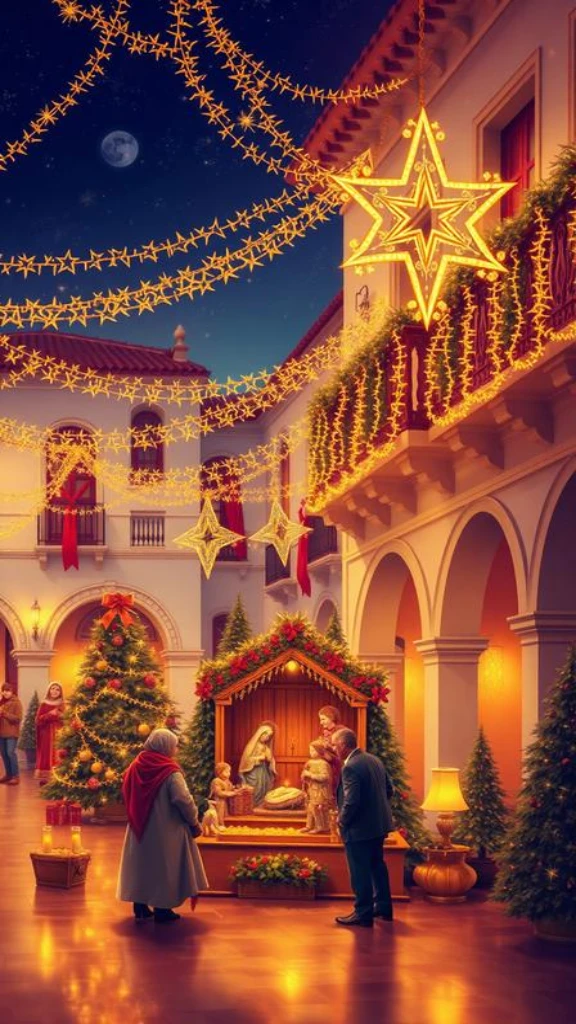
10 Interesting Facts About Christmas in Spain
- Spain celebrates Christmas from December 22nd through January 6th, making it a two-week marathon of merriment and mandatory family gatherings.
- The main gift-giving day isn’t Christmas—it’s January 6th, Three Kings’ Day, when children receive presents from the Magi instead of Santa Claus.
- On Christmas Eve, many Spanish families attend Misa del Gallo (Rooster’s Mass) at midnight, named after the rooster that supposedly crowed when Jesus was born.
- El Gordo, Spain’s massive Christmas lottery held on December 22nd, is the world’s biggest lottery and a tradition families have participated in for over 200 years.
- Spanish nativity scenes, called belenes, are elaborate miniature villages that go way beyond Mary, Joseph, and baby Jesus—expect bakers, butchers, and entire town squares.
- In Catalonia, nativity scenes include a quirky character called the Caganer, a small figure depicted in the act of defecating, symbolizing fertility and good fortune.
- Spaniards eat twelve grapes at midnight on New Year’s Eve, one for each chime of the clock, to ensure twelve months of prosperity.
- Turrón, a nougat confection made with almonds and honey, is the undisputed king of Spanish Christmas sweets and comes in countless regional varieties.
- The Three Kings parade through Spanish cities on January 5th evening, tossing candy to children lining the streets in one of the most magical events of the year.
- Christmas dinner in Spain typically happens on Christmas Eve (Nochebuena) rather than Christmas Day, with the meal often starting at 10 PM and lasting until dawn.
10 Facts About Christmas in Spain
- Spanish children leave shoes on their balconies or windowsills on January 5th, hoping the Three Kings will fill them with gifts and sweets overnight.
- The Christmas season officially kicks off on December 8th with the Feast of the Immaculate Conception, a national holiday across Spain.
- Polvorones are crumbly shortbread cookies wrapped in paper that you must unwrap carefully or they’ll disintegrate into a delicious mess all over your lap.
- In some Spanish regions, people sing villancicos (Christmas carols) that date back centuries and feature stories about shepherds, angels, and humble mangers.
- The Roscón de Reyes, a ring-shaped cake eaten on Three Kings’ Day, hides a small figurine and a dried bean—find the figurine and you’re royalty; find the bean and you pay for next year’s cake.
- Spanish Christmas markets are quieter and more traditional than their European counterparts, focusing on handcrafted nativity figures, local foods, and artisan goods.
- Seafood dominates many Spanish Christmas tables, with prawns, lobster, sea bass, and percebes (goose barnacles) taking center stage alongside roasted meats.
- The poinsettia plant, called Flor de Pascua in Spain, decorates homes and churches throughout the holiday season as a symbol of the Star of Bethlehem.
- Spanish families often gather to watch the Three Kings arrive by boat, helicopter, or even camel, depending on which coastal or inland city they’re visiting.
- Mantecados are soft, crumbly cakes made with pork lard (yes, really) that melt in your mouth and taste infinitely better than their ingredients might suggest.
Facts About Christmas in Spain for Kids
- Spanish children write letters to the Three Wise Men instead of Santa Claus, addressing them to Melchior, Gaspar, and Balthazar with their wish lists.
- Kids leave water and food for the Three Kings’ camels on January 5th, knowing that tired camels mean the kings might not make it to their house.
- Many Spanish schools create living nativity scenes where children dress as shepherds, angels, and inn keepers, complete with real donkeys and sheep.
- The tradition of building belenes at home means Spanish kids spend hours arranging tiny figures, moss, rivers made of aluminum foil, and twinkling lights.
- On Three Kings’ Day, children wake up incredibly early to see if they’ve been good enough to receive gifts or if they’ve gotten coal (usually chocolate coal nowadays).
- Spanish kids sing Christmas carols called villancicos in school concerts, often accompanied by tambourines and zambombas (friction drums that make funny sounds).
- The story of the Caganer teaches children that everyone is equal and part of the natural cycle, even in the most sacred of scenes.
- Children participate in decorating their homes with misterios (small nativity scenes) that they carefully unpack and arrange as family bonding activities.
- Spanish kids learn that the Three Kings travel from the Far East following a star, just like in the biblical story, making geography part of the magic.
- Many children attend the Cabalgata de Reyes parade on January 5th, scrambling to catch candy thrown from elaborate floats featuring the Three Kings in glittering robes.
- The tradition of eating twelve grapes at midnight on New Year’s Eve turns into a hilarious challenge for kids who inevitably choke, giggle, and make a mess.
- Spanish children often receive both toys and practical gifts on Three Kings’ Day, because apparently even magical wise men think you need socks.
- Kids leave their shoes in the most visible spot possible, sometimes creating shoe pyramids to ensure the Three Kings don’t miss their house.
- The zambomba parties in Andalusia invite children to participate in folk singing and traditional music, creating loud, joyful chaos throughout December.
- Spanish children learn that baby Jesus doesn’t arrive in the nativity scene until Christmas Eve, creating anticipation as the empty manger waits for its tiny occupant.
5 Facts About Christmas in Spain
- Spanish Christmas embraces the concept of “Belén viviente” or living nativity scenes, where entire villages recreate Biblical Bethlehem with costumed residents, authentic animals, and functioning workshops.
- The Christmas lottery, El Gordo, creates millionaires across Spain on December 22nd, with entire towns sometimes sharing winning tickets bought collectively by neighbors.
- Nochebuena dinner is the centerpiece of Spanish Christmas, featuring multiple courses that can include jamón ibérico, seafood, roasted lamb, and endless desserts.
- January 5th holds more excitement than Christmas Eve for Spanish children, as the anticipation of Three Kings’ gifts reaches fever pitch during the evening parade.
- Spanish Christmas traditions vary wildly by region—Catalonia has its Caga Tió (pooping log), while the Basque Country features Olentzero, a Basque Santa-like figure who’s a charcoal maker.
Christmas in Spain: Traditions
- The Christmas season in Spain officially begins with the lighting of festive illuminations in city centers, transforming streets into glittering wonderlands by early December.
- Families spend weekends in December visiting elaborate belenes displayed in churches, town squares, and shopping centers, each trying to outdo the other in creativity.
- The tradition of eating turrón dates back to the Moors in medieval Spain, and today over 40 million pounds are consumed during the Christmas season.
- Spanish households deep-clean their homes before Christmas Eve in a tradition called “limpieza navideña,” believing a clean home welcomes prosperity and good spirits.
- Many regions host mercadillos navideños (Christmas markets) where artisans sell handmade figurines for nativity scenes, decorations, and traditional holiday foods.
- The Caga Tió tradition involves children “feeding” a log with scraps for weeks, then hitting it with sticks on Christmas Eve while singing songs until it “poops” out presents.
- Spanish families attend multiple masses during the Christmas season, including Misa del Gallo at midnight on Christmas Eve and services on Three Kings’ Day.
- The tradition of singing aguinaldos involves groups going door-to-door caroling in exchange for treats, money, or glasses of wine from generous neighbors.
- Many Spanish homes display elaborate belenes with running water features, working mills, and lighting effects that change from day to night scenes.
- The Feast of the Holy Innocents on December 28th is Spain’s version of April Fools’ Day, when people play pranks and newspapers print fake stories.
- Spanish grandmothers begin baking polvorones, mantecados, and other traditional sweets weeks in advance, filling homes with the scent of cinnamon and lard-based pastries.
- The tradition of sobremesa means families linger at the table for hours after Christmas meals, talking, laughing, and slowly digesting their feast.
- New Year’s Eve in Spain centers around eating twelve grapes at midnight in sync with the Puerta del Sol clock chimes in Madrid, broadcast live across the nation.
- Spanish children often perform small plays or skits about the nativity story during family gatherings, complete with homemade costumes and enthusiastic overacting.
- The tradition of the Urn of Fate involves children drawing papers with saints’ names, and whoever draws baby Jesus gets to place the figurine in the nativity scene.
- Many Spanish families attend Christmas Eve dinner in their finest clothes, treating Nochebuena as the most elegant and important meal of the entire year.
- The custom of Monte de Piedad involves charitable pawn shops providing interest-free loans before Christmas so families can afford proper celebrations and gifts.
- Spanish cities compete for the most spectacular Christmas lights, with Madrid’s displays attracting millions of visitors who stroll through illuminated streets eating roasted chestnuts.
- The tradition of sharing turrones and other sweets with neighbors strengthens community bonds, with plates of treats exchanged between apartments and houses.
- Many regions maintain the custom of Christmas bonfires where communities gather to sing, dance, and celebrate while staying warm on cold winter nights.
Where to Spend Christmas in Spain
- Barcelona offers magical Christmas markets in the Gothic Quarter, spectacular light displays along Passeig de Gràcia, and the famous Santa Llúcia market near the cathedral.
- Madrid transforms into a winter wonderland with its iconic Plaza Mayor Christmas market, elaborate belenes, and the dazzling lights of Gran Vía.
- Seville’s Christmas celebrations blend Andalusian warmth with festive traditions, featuring impressive nativity scenes, flamenco-infused carols, and mild weather perfect for outdoor celebrations.
- Granada combines Christmas festivities with breathtaking views of the snow-capped Sierra Nevada mountains, creating a postcard-perfect holiday backdrop.
- San Sebastián in the Basque Country offers a unique Christmas experience with Olentzero celebrations, incredible food markets, and New Year’s Eve tambourine parades.
- Toledo becomes a medieval Christmas fairy tale with its historic streets decorated in lights, artisan markets, and belenes displayed in ancient churches and monasteries.
- Valencia hosts spectacular Three Kings parades and features a unique tradition of chocolate con churros for breakfast on Christmas morning in the Central Market.
- Córdoba’s Jewish Quarter transforms into a Christmas showcase with white-washed walls framed by festive decorations and the stunning Mezquita-Cathedral hosting special services.
- Salamanca’s Plaza Mayor, one of Spain’s most beautiful squares, hosts an enchanting Christmas market with handcrafted gifts and traditional foods under twinkling lights.
- Málaga on the Costa del Sol offers a warmer Christmas experience with beach walks between festive activities, elaborate light displays, and one of Spain’s longest Christmas celebration periods.
- The Canary Islands provide a tropical Christmas alternative where you can sunbathe in the morning and enjoy Christmas carols on the beach in the evening.
- Ronda in Andalusia combines dramatic cliff-top views with intimate Christmas celebrations, artisan markets, and traditional festivals in its historic bullring.
- Santiago de Compostela offers a deeply spiritual Christmas experience with special pilgrim services, Galician folk traditions, and the stunning cathedral as a breathtaking backdrop.
- Bilbao blends modern architecture with traditional Basque Christmas customs, featuring impressive markets, the Olentzero tradition, and world-class gastronomy throughout the season.
- Zaragoza hosts one of Spain’s most impressive belenes inside the Basilica del Pilar, along with vibrant markets and the unique tradition of jotas (folk dances) performed in Christmas concerts.
- The Pyrenees mountain towns offer a white Christmas experience with skiing, cozy mountain lodges, and traditional Catalan and Aragonese Christmas celebrations around roaring fireplaces.
- Cádiz celebrates Christmas with its characteristic humor, hosting comedy competitions, satirical Christmas plays, and the famous New Year’s Eve party at the main square.
- Alicante’s mild Mediterranean climate allows for outdoor Christmas activities, beautiful hogueras (bonfires), and spectacular Three Kings parades arriving by boat at the harbor.
- Burgos showcases Gothic grandeur during Christmas with its cathedral hosting special concerts, traditional markets in medieval squares, and Castilian Christmas feasts featuring roasted lamb.
- The white villages of Andalusia like Frigiliana and Mijas offer intimate Christmas experiences with entire towns decorated, local choirs singing villancicos, and authentic Spanish hospitality.
Best Facts About Christmas in Spain
- Spanish Christmas trees only became popular in the 1950s, as belenes were traditionally the primary decoration, making them a relatively modern addition to Spanish homes.
- The traditional Christmas drink is cava, Spain’s answer to champagne, which flows freely at Christmas dinners, New Year’s celebrations, and Three Kings’ parties.
- Spanish Christmas advertisements, especially the annual Christmas lottery commercial, are emotional masterpieces that make the entire nation cry every year without fail.
- Many Spanish families maintain the tradition of not exchanging gifts on Christmas Day, saving all presents for Three Kings’ Day to maintain the historical significance of the Epiphany.
- The Spanish Christmas season includes no fewer than five major celebration days: Nochebuena, Christmas Day, New Year’s Eve, New Year’s Day, and Three Kings’ Day.
- Panettone has been adopted into Spanish Christmas traditions despite being Italian, now competing with traditional Spanish sweets in supermarkets and bakeries.
- Spanish department stores like El Corte Inglés transform their windows into elaborate Christmas displays that tell stories and attract crowds of admirers throughout December.
- The tradition of Christmas bonuses, called paga extra, means Spanish workers receive an extra month’s salary in December, fueling the holiday economy and celebration spending.
- Many Spanish regions have their own unique Christmas sweets—Galicia has filloas, Catalonia has neules, and Andalusia has pestiños—creating delicious regional diversity.
- Spanish children traditionally receive both gifts from their parents on Christmas and gifts from the Three Kings in January, basically doubling their present haul.
- The Sagrada Família in Barcelona hosts special Christmas services, and the nativity scene carved into the cathedral’s façade becomes a pilgrimage site during the season.
- Spanish Christmas songs blend religious villancicos with modern pop songs, creating playlists that jump from 15th-century carols to Mariah Carey without missing a beat.
- Many Spanish offices close between Christmas and New Year’s, allowing for a week-long holiday break that extends the festive atmosphere across the nation.
- The tradition of Christmas card sending has declined in Spain, replaced largely by WhatsApp messages featuring dancing emoji kings and animated Christmas trees.
- Spanish supermarkets dedicate entire aisles to Christmas products starting in November, creating overwhelming choices between dozens of turrón varieties and polvorón brands.
- The Three Kings traditionally represent three different ages, skin colors, and continents, symbolizing universality and the global nature of Jesus’s message.
- Many Spanish families watch the live Three Kings parade broadcast from Madrid on January 5th, a television tradition that rivals New Year’s Eve programming in viewership.
- Spanish Christmas decorations tend toward gold, red, and white color schemes, creating elegant rather than kitschy holiday aesthetics in homes and public spaces.
- The tradition of Christmas tamborradas (drum parades) in some regions creates thunderous celebrations where entire towns march while playing drums in synchronized rhythm.
- Spanish grandparents, or abuelos, play central roles in Christmas celebrations, often hosting family gatherings, teaching grandchildren traditions, and ensuring everyone is properly fed.
- Many Spanish beaches host “Christmas swim” traditions where brave souls plunge into cold December waters, proving that holiday madness transcends geographic location.
- The Bethlehem Star decorations in Spain often feature elaborate designs with hundreds of lights, symbolizing the star that guided the Three Kings on their journey.
- Spanish Christmas chocolates include figurines shaped like the Three Kings, camels, and nativity characters, which children enjoy eating after the figurines have served their decorative purpose.
- The tradition of Christmas postal workers in Spain involves them selling lottery tickets and stamps, becoming unofficial holiday ambassadors who bring festive cheer with every delivery.
- Many Spanish families preserve the tradition of reading the Christmas story from the Bible on Christmas Eve before dinner, maintaining the religious heart of the celebration.
- Spanish Christmas parades feature brass bands, giant puppets, and elaborate floats that would rival any American Thanksgiving parade in spectacle and community participation.
- The tradition of kissing under mistletoe never caught on in Spain, sparing countless awkward workplace moments but disappointing romantics hoping for Spanish passion.
- Spanish children often receive small gifts in their shoes throughout the week leading up to Three Kings’ Day, building anticipation with each morning’s surprise discovery.
- Many Spanish cities maintain permanent belén displays that they update and modify each year, creating ongoing artistic projects that communities take immense pride in.
- The tradition of hot chocolate with churros for breakfast on Christmas morning provides the perfect fuel for opening presents and surviving marathon family gatherings.
- Spanish Christmas includes the tradition of “feeding” the Caga Tió log by covering it with a blanket, creating absurd yet beloved family rituals around a defecating log.
- Many Spanish families make homemade turrón using ancient recipes passed down through generations, though most eventually give up and buy it from specialists.
- The Three Kings leave symbolic gifts of gold, frankincense, and myrrh alongside actual toys, teaching children about the original biblical story through tangible tradition.
- Spanish Christmas incorporates the tradition of charity drives where communities collect toys, food, and clothing for those in need, embodying the season’s spirit of generosity.
- The sound of castañuelas (castanets) clicking during Christmas folk performances adds distinctly Spanish flair to seasonal music, separating it from generic international carols.
- Many Spanish vineyards offer Christmas wine-tasting experiences, pairing regional wines with traditional holiday foods in picturesque countryside settings throughout December.
- The tradition of Christmas concerts in Spanish cathedrals showcases centuries-old architecture’s acoustics with performances ranging from Gregorian chants to contemporary Christmas classics.
- Spanish families often create Christmas “villages” under their trees, with miniature trains, houses, and figures that expand annually until entire rooms become holiday dioramas.
- The practice of empresas (companies) giving Christmas gift baskets to employees includes everything from fancy hams to bottles of wine, creating office gift-basket envy.
- Many Spanish hotels and restaurants offer special Christmas menus that showcase regional specialties, turning the holiday season into an extended culinary celebration.
Conclusion
Whether you’re team Santa or team Three Kings, Spain’s Christmas customs offer something special that runs long beyond a single day. From edible nativity figures to logs that defecate presents, Spanish Christmas illustrates that the best festivities combine both the sacred and the slightly ludicrous.
These customs unite families, preserve history, and create memories wrapped in turrón crumbs and cava bubbles. So next time December rolls around, consider celebrating Spanish-style—stretch out the festivities, eat till your pants protest, and remember that if twelve grapes at midnight seems excessive, you’re not thinking like a Spaniard. ¡Feliz Navidad and próspero Año Nuevo!