There’s something wonderfully weird about the way the English celebrate Christmas—it’s like they grabbed all the nice aspects of winter, peppered them with eccentric customs, and put the whole thing in a cracker that goes pop!
I’ve always been amazed by how a culture that’s typically shy about emotions suddenly changes into a nation of jumper-wearing, Brussels-sprout-eating, Queen’s-speech-watching fans every December.
Whether you’re intrigued about centuries-old practices or just want to impress your buddies at the pub quiz, these festive facts will sleigh your expectations faster than you can say “happy Christmas” (not “merry,” mind you—that’s really important to some folks).
Let’s unwrap some beautifully British yuletide knowledge!
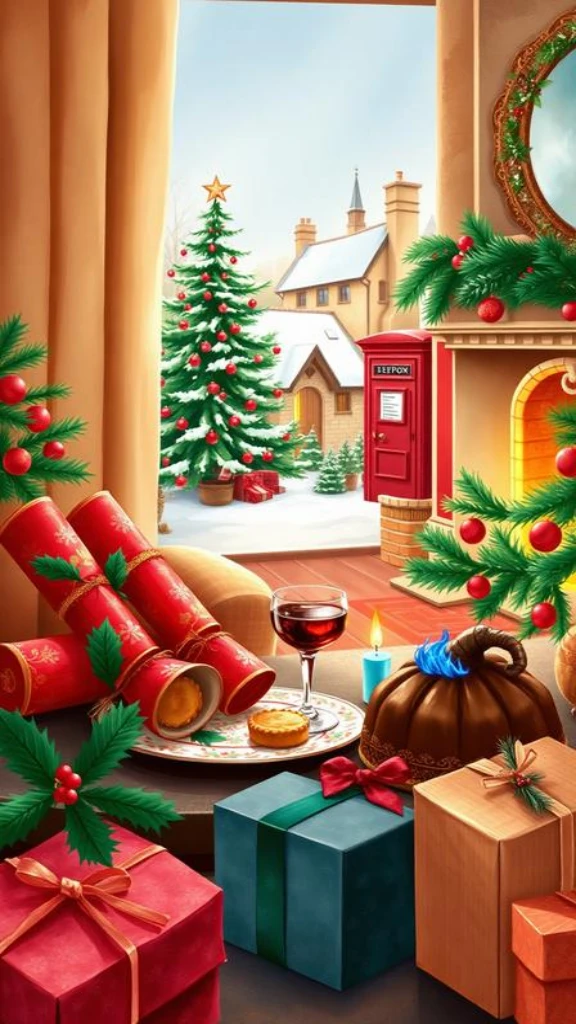
Fun Facts About Christmas in England for Kids
- English children leave mince pies and sherry for Father Christmas, not milk and cookies—because apparently Santa prefers a boozy snack after all those rooftops.
- The tradition of Christmas crackers was invented by a London sweet maker named Tom Smith in 1847 who was inspired by French bonbons.
- Kids in England used to go “wassailing” door-to-door, singing for treats—basically the original Christmas caroling with snack rewards.
- Pantomimes are silly Christmas theater shows where boys dress as girls, girls dress as boys, and everyone shouts “He’s behind you!” at the villain.
- English children write letters to Father Christmas and toss them into the fireplace—the smoke carries wishes up the chimney to the North Pole.
- Boxing Day, December 26th, isn’t about boxing matches but about giving boxes of gifts to service workers and the less fortunate.
- Stockings were traditionally hung by the fireplace because Saint Nicholas once dropped gold coins down a chimney that landed in drying socks.
- Christmas pudding often contains a silver sixpence coin, and whoever finds it gets good luck for the year—though hopefully not a chipped tooth.
- Reindeer aren’t native to England, so Father Christmas technically has to import his flying workforce from Scandinavia.
- The world’s first commercial Christmas card was created in London in 1843 by Sir Henry Cole, featuring a family raising glasses in a toast.
- English kids leave carrots out for Rudolph and his reindeer friends because even magical creatures need their vegetables.
- Turkey became the traditional English Christmas dinner in the 16th century when King Henry VIII decided to make it fashionable—talk about royal influence.
- Christmas trees weren’t common in England until Prince Albert brought the tradition from Germany in the 1840s for Queen Victoria.
- In Victorian times, English children received practical gifts like oranges, nuts, and handmade toys rather than the latest gaming consoles.
- The Yule log tradition came from ancient times when a large log was burned throughout the Christmas season for warmth and good fortune.
- English kids sometimes find chocolate coins in their stockings, wrapped in gold foil, called “chocolate money” or “gold coins.”
- Advent calendars originally came from Germany but became hugely popular in England, counting down the 24 days before Christmas.
- Christmas jumpers (ugly sweaters) have become a beloved tradition, with kids and adults competing for the most outrageously festive knitwear.
- The legend says that animals can speak at midnight on Christmas Eve—though no English child has stayed awake long enough to confirm.
- Mince pies used to contain actual meat mixed with dried fruits and spices, but modern versions are mercifully meat-free and much sweeter.
- English schools often perform nativity plays where kids dress as shepherds, angels, and occasionally very creative interpretations of farm animals.
- Christmas Eve is called “Stir-up Sunday” when families traditionally stir the Christmas pudding mixture while making wishes.
- British kids know that Father Christmas wears red because of Coca-Cola’s advertising, but they still believe he lives somewhere near Lapland.
- The Christmas cracker’s “snap” comes from a tiny strip of chemically-treated paper that creates a harmless mini-explosion when pulled.
- English children learn that leaving the Christmas tree up past Twelfth Night (January 6th) brings bad luck for the coming year.
Fun Facts About Christmas in England for Adults
- The average English household spends over £500 on Christmas, with a significant portion going toward food and drink that’ll be regretted in January.
- Britain’s Christmas number one song is a matter of national importance, with betting shops taking wagers on which artist will claim the coveted spot.
- The Queen’s Christmas broadcast has been a tradition since 1932, making it one of the longest-running holiday television events in history.
- Mulled wine, or “wassail,” contains spices like cinnamon and cloves, served warm to combat the damp British winter—and sometimes sanity.
- English pubs see their busiest night of the year on Christmas Eve, affectionately known as “Black Eye Friday” due to increased scuffles.
- Stilton cheese with port is considered the sophisticated English way to end Christmas dinner, because apparently wine isn’t fancy enough.
- The tradition of “Christmas pudding Sunday” involves making pudding weeks in advance and letting it mature like a fine wine, but stickier.
- English adults secretly compete over whose Christmas decorations are most tasteful, while simultaneously judging anyone who decorates before December.
- The average Brit will consume approximately 6,000 calories on Christmas Day alone—roughly three times the recommended daily amount.
- Fortnum & Mason in London sells Christmas puddings for over £200, because some people believe luxury tastes better when it’s absurdly expensive.
- Christmas bonus culture in England varies wildly, from generous hampers to a disappointing envelope containing a £10 gift card to somewhere you’ll never shop.
- The tradition of Christmas ghost stories dates back centuries in England—Dickens’ “A Christmas Carol” being the most famous example.
- English adults have perfected the art of forced politite gratitude when receiving terrible Secret Santa gifts at office parties.
- Baileys Irish Cream becomes practically medicinal in English households during Christmas, appearing in coffee, hot chocolate, and directly in mouths.
- The post-Christmas sales, particularly Boxing Day, turn mild-mannered English shoppers into determined bargain hunters with impressive tactical skills.
- Christmas television specials are such serious business that families plan their entire day around watching specific shows together.
- The average English adult will gain 5-7 pounds between Christmas and New Year, then spend January pretending to enjoy salads.
- Midnight Mass on Christmas Eve attracts both devout churchgoers and once-a-year attendees who suddenly remember they’re culturally Anglican.
- English workplace Christmas parties have a legendary reputation for career-limiting decisions involving photocopiers and inappropriate confessions to managers.
- The “Christmas pudding challenge” involves eating dessert after an enormous meal, even when you’re convinced your stomach has physically run out of room.
- British adults understand that “Christmas drinks” with colleagues in early December is mandatory attendance disguised as optional fun.
- The cost of Christmas has spawned an entire industry of January financial advice articles titled things like “How to Recover from Holiday Spending.”
- English households have an unspoken competition over whose Christmas cards display the most impressive family achievements or exotic holiday photos.
- The art of re-gifting unwanted presents has been perfected by generations of English adults who maintain detailed mental records of gift origins.
- Brandy butter, hard sauce made with butter, sugar, and brandy, is the adult reason English people tolerate eating Christmas pudding.
Christmas in England Traditions
- Decorating homes with holly, ivy, and mistletoe dates back to pagan times when evergreens symbolized eternal life through harsh winters.
- Kissing under the mistletoe originated from ancient Norse mythology and became a cheeky Victorian parlor game with complicated rules about berry-picking.
- Christmas crackers must be pulled at the dinner table, resulting in terrible jokes, paper crowns, and plastic toys nobody wants but everyone keeps.
- The Christmas dinner table traditionally features roast turkey, stuffing, pigs in blankets, roast potatoes, Brussels sprouts, cranberry sauce, and bread sauce.
- Wearing paper crowns from crackers throughout dinner is non-negotiable, even if they make you look ridiculous—especially if they make you look ridiculous.
- Watching the Queen’s speech at 3 PM on Christmas Day is a tradition that pauses all activities while the nation collectively listens to royal wisdom.
- Christmas Eve church services, particularly Midnight Mass and carol services by candlelight, remain popular even among non-regular churchgoers.
- Setting the Christmas pudding aflame with brandy creates dramatic tableside entertainment and tests the smoke alarm’s functionality simultaneously.
- Sending Christmas cards to everyone you’ve ever met is a peculiarly English tradition that fills mantlepieces and creates annual card-list anxiety.
- The Christmas tree must be decorated with a mix of meaningful ornaments, tinsel, lights, and that wonky star that never sits straight on top.
- Boxing Day walks are mandatory for working off Christmas dinner, preferably involving Wellington boots, muddy countryside, and a pub lunch afterward.
- Pantomime attendance between Christmas and New Year is a theatrical tradition filled with audience participation, cross-dressing, and deliberate silliness.
- Leaving out a glass of sherry and mince pie for Father Christmas teaches children about hospitality—and gives parents a sneaky snack.
- The Queen’s Christmas pudding recipe has been used by the royal family for generations, supposedly containing 13 ingredients representing Christ and the apostles.
- Christmas morning present-opening follows strict protocols in many households: youngest to oldest, one at a time, with appropriate appreciation shown for each gift.
- The Christmas trifle must have multiple layers of sponge, jelly, custard, cream, and fruit, assembled in a glass bowl to display its structural integrity.
- Attending Christmas markets in cities like Bath, Manchester, and Birmingham has become a modern tradition involving mulled wine and overpriced crafts.
- Watching Christmas television specials, particularly the Doctor Who Christmas special and soap opera holiday episodes, is scheduled into the day’s activities.
- New Year’s Eve isn’t technically Christmas but seamlessly connects to the festive period, often celebrated with parties, fireworks, and “Auld Lang Syne.”
- Twelfth Night marks the official end of Christmas when decorations must come down, or superstition says you’ll have bad luck all year.
- The Christmas jumper tradition has evolved from genuine knitwear gifts to ironically awful designs worn deliberately for charity fundraising events.
- Stuffing stockings for children and partners remains a Christmas Eve tradition, often completed while assembling bikes at 2 AM and questioning life choices.
- English Christmas cake, a rich fruitcake covered in marzipan and royal icing, is baked weeks in advance and “fed” with brandy regularly.
- Charitable giving increases dramatically during Christmas, with collection tins appearing everywhere and people feeling seasonally generous toward good causes.
- The tradition of “first-footing” at New Year technically isn’t Christmas, but in northern England, it involves visiting neighbors with symbolic gifts after midnight.
10 Interesting Facts About Christmas in England
- Oliver Cromwell actually banned Christmas in England from 1647 to 1660 because he considered it too indulgent and not religious enough—talk about a party pooper.
- The world’s first electric Christmas lights were created in England in 1881, though they were so expensive only the wealthiest families could afford them.
- Good King Wenceslas from the famous carol wasn’t English at all—he was Duke of Bohemia, but Brits adopted his story anyway.
- Charles Dickens’ “A Christmas Carol” practically invented the modern English Christmas, popularizing the ideas of family gatherings, charity, and seasonal goodwill.
- English Christmas stamps were first issued in 1966, making Britain one of the first countries to create special holiday postal designs.
- The tradition of Christmas shopping didn’t really exist until Victorian times when industrial production made goods cheaper and more available to ordinary people.
- Harrods department store in London creates elaborate Christmas displays that attract tourists from around the world, some starting their holiday shopping in July.
- The Christmas truce of 1914 during World War I saw British and German soldiers emerging from trenches to exchange gifts and play football together.
- England’s shortest Christmas sermon was reportedly delivered in 1720 by Reverend Edward Bickersteth, lasting exactly 60 seconds—a miracle in itself.
- The royal family’s Sandringham Estate in Norfolk hosts the monarchs for Christmas, where they follow surprisingly normal traditions despite living in a palace.
Funny Fun Facts About Christmas in England
- The average English person will eat their body weight in Quality Street chocolates between December 1st and January 2nd, prioritizing the purple ones.
- Every English household contains at least one relative who insists on playing charades after dinner despite everyone else’s obvious lack of enthusiasm.
- Brussels sprouts are mandatory at Christmas dinner even though approximately 87% of English children would rather eat the napkin.
- The phrase “I’m absolutely stuffed” will be repeated no fewer than fifteen times per person throughout Christmas Day, yet everyone finds room for trifle.
- Christmas cracker jokes are legendarily terrible, yet everyone pretends they’re hearing them for the first time and forces polite laughter.
- There’s always one family member who films the entire present-opening ceremony, creating footage that will never be watched again but must be captured.
- English people will apologize to the Christmas tree while squeezing past it, because even furniture deserves courtesy during the festive season.
- The battle to control the television remote on Christmas Day is more strategic than any military operation, with alliances forming and dissolving hourly.
- Someone will inevitably burn themselves on the flaming Christmas pudding while trying to photograph it for social media—tradition meets technology.
- English households contain emergency supplies of Christmas crackers, just in case someone shows up unexpectedly and there aren’t enough to go around.
- The Christmas leftover sandwich reaches levels of architectural complexity that would impress structural engineers, containing at least seven different components.
- Wearing your paper crown from the cracker is required until it either falls apart or someone sits on it, whichever comes first.
- Every family has one person who peaks too early, distributing gifts in October and finishing their shopping before Halloween makes sense.
- The phrase “I’m never eating again” is typically uttered around 5 PM on Christmas Day, approximately two hours before someone asks about evening snacks.
- English people will watch terrible Christmas films they’d never admit to enjoying, including ones where the plot involves magical snowglobes or time-traveling Santa.
- There’s intense competition over who can spot the first Christmas advertisement, usually sometime in September when it’s still technically summer.
- The Christmas jumper you receive will be either hilariously perfect or traumatically ugly, with no middle ground possible in jumper-gifting outcomes.
- Someone will absolutely fall asleep during the Queen’s speech and then pretend they were just “resting their eyes” when called out.
- English Christmas involves eating food you’d never consume any other time of year, like dates, because apparently December makes them appetizing.
- The art of looking genuinely delighted about receiving socks, shower gel sets, or novelty mugs is perfected by every English person by adulthood.
- Boxing Day involves staring into the refrigerator for twenty minutes trying to figure out how to use leftover cranberry sauce creatively.
- Christmas television guides are studied with the intensity of military strategists planning a campaign, with schedules marked and conflicts negotiated.
- Someone will definitely mention how Christmas “isn’t what it used to be” while simultaneously enjoying all the modern conveniences previous generations lacked.
- The post-Christmas diet planning begins on December 26th, with everyone convinced that January will magically transform them into fitness enthusiasts.
- English people maintain that Christmas isn’t about gifts or commercialism, then proceed to stress about both for three months straight.
Easy Fun Facts About Christmas in England
- Christmas Day in England is always December 25th, a public holiday when most businesses close and families gather for celebrations.
- Father Christmas is what English children call the gift-bringer, though “Santa Claus” has become equally common due to American influence.
- English Christmas colors are traditionally red, green, gold, and white, seen in decorations, wrapping paper, and festive clothing everywhere.
- Snow on Christmas Day in England is actually quite rare—”White Christmas” happens only about once every six years in most places.
- Christmas cards became popular in Victorian England and remain an important tradition, with millions sent through Royal Mail every December.
- Carol singing involves groups going door-to-door singing Christmas songs, sometimes collecting donations for charity while spreading seasonal cheer.
- Advent calendars count down to Christmas with small doors opened daily, revealing chocolates, toys, or pictures throughout December.
- Christmas shopping on high streets and in town centers is a major activity, with special late-night shopping events before the holiday.
- The Christmas period officially runs from Christmas Eve through New Year’s Day, often extending to Twelfth Night on January 6th.
- English children typically receive gifts on Christmas morning rather than Christmas Eve like some European countries prefer.
- Christmas stockings are hung up on Christmas Eve, traditionally by the fireplace, and found filled with small gifts and treats in the morning.
- Roast turkey is the most popular Christmas dinner choice, though some families prefer goose, chicken, or vegetarian alternatives.
- Christmas music plays everywhere throughout December, in shops, restaurants, and on radio stations dedicated entirely to holiday songs.
- Wrapping presents beautifully is considered important, with English people taking pride in neat folds, proper tape placement, and coordinating paper.
- Christmas lights decorate houses, streets, and town centers, with some neighborhoods becoming famous for elaborate synchronized light displays.
- The Christmas holiday often includes time off work, with many businesses closing for several days between Christmas and New Year.
- Christmas dinner is typically eaten in the early afternoon, around 1-3 PM, rather than evening like regular meals.
- English supermarkets sell special Christmas food ranges including festive sandwiches, desserts, and seasonal drinks throughout December.
- Christmas greetings include “Happy Christmas,” “Merry Christmas,” and “Season’s Greetings,” with debates over which is most appropriate.
- The twelve days of Christmas technically begin on Christmas Day and end on January 5th, not the countdown before Christmas.
- Christmas parties at workplaces, schools, and social clubs happen throughout December, not just on Christmas Day itself.
- English weather during Christmas is typically cold and damp rather than snowy, with temperatures around 2-8°C being normal.
- Christmas traditions vary by region within England, with northern and southern areas having slightly different customs and foods.
- Children leave letters for Father Christmas, often including wish lists and promises of good behavior in exchange for desired gifts.
- English Christmas involves family time more than anything else, with generations gathering together for meals, games, and relaxation.
Best Fun Facts About Christmas in England
- Westminster Abbey has held Christmas services for nearly a thousand years, maintaining continuous holiday traditions longer than most countries have existed.
- The British Museum houses ancient Christmas artifacts including medieval decorations, Victorian cards, and documents about evolving holiday customs through centuries.
- English Christmas markets in cities like Bath and Birmingham attract millions of visitors, offering authentic German-style chalets alongside British specialties.
- The Tower of London displays spectacular Christmas decorations and hosts special holiday events in a setting steeped in 900 years of history.
- English Christmas has influenced celebrations worldwide, particularly through literature, with Dickens’ works shaping modern holiday observances internationally.
- The royal family’s Christmas broadcast reaches millions globally, making the English Christmas tradition accessible to people in Commonwealth countries everywhere.
- English Christmas carols like “Hark! The Herald Angels Sing” and “O Come, All Ye Faithful” are sung worldwide in dozens of languages.
- The perfection of Christmas pudding recipe took generations of English cooks, resulting in a dessert that’s now considered a UNESCO-protected cultural tradition.
- English Christmas hospitality is legendary, with the tradition of welcoming strangers during the holiday season dating back to medieval feast days.
- London’s Oxford Street Christmas lights attract nearly half a million people to the switching-on ceremony, making it Europe’s most-watched holiday display.
- English Christmas innovation includes inventing Christmas crackers, commercial Christmas cards, and electric tree lights—all now used globally.
- The tradition of Christmas pantomime is uniquely English, combining theater, comedy, music, and audience participation in ways found nowhere else.
- English Christmas literature extends beyond Dickens to include classics by authors like C.S. Lewis, whose Narnia books feature “always winter, never Christmas.”
- The quality of English Christmas craftsmanship shows in handmade decorations, traditionally crafted crackers, and artisanal food products sold in specialty shops.
- English Christmas resilience proved itself during WWII when families maintained traditions despite rationing, blackouts, and bombing raids.
- The English invented the Christmas bonus for workers, starting a tradition of seasonal appreciation that spread throughout business cultures worldwide.
- English Christmas music encompasses everything from medieval carols to modern pop songs, with British artists dominating Christmas charts internationally.
- The preservation of ancient Christmas traditions in English villages offers authentic experiences unavailable in more commercialized settings elsewhere.
- English Christmas charity work has inspired global movements, with organizations like the Salvation Army starting their holiday assistance programs in Victorian London.
- The sophistication of English Christmas dining has elevated holiday meals from simple feasts to culinary events requiring advanced planning and technique.
- English Christmas storytelling traditions kept folklore alive through oral histories shared during long winter nights around fires.
- The grandeur of English manor house Christmases showcased in period dramas reflects real historical celebrations that defined luxury holiday hospitality.
- English Christmas architecture includes churches designed specifically for Christmas services, with acoustics and spaces optimized for carol singing.
- The cultural impact of English Christmas extends through Commonwealth countries, where British traditions merged with local customs creating unique hybrid celebrations.
- English Christmas adaptation continues evolving while respecting history, balancing modern conveniences with cherished customs passed through generations, creating timeless magic.
Conclusion
Well, there you have it—enough English Christmas trivia to make you the most irritating (or delightful, depending on viewpoint) person at any holiday event!
Whether you’re preparing to impress your British relatives, prepare for a UK Christmas visit, or simply appreciate how particularly beautiful English festive traditions are, these facts indicate that Christmas over the pond comprises equal parts touching customs and charmingly odd behavior.
Now go off and impart this wisdom to everyone who’ll listen, ideally while wearing a paper crown and holding a mince pie. After all, if you can’t be mildly obnoxious with festive trivia over Christmas, when can you? Happy Christmas, and may your crackers always snap properly!